
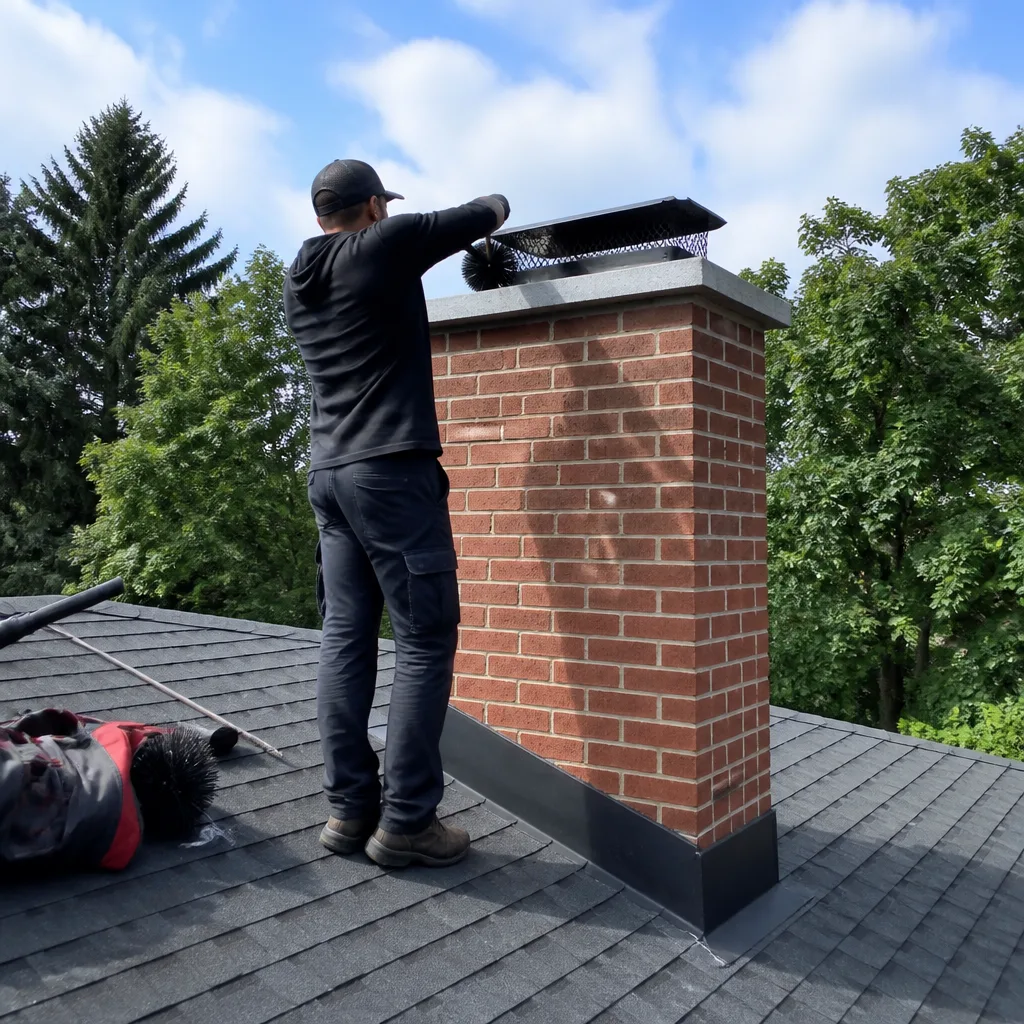
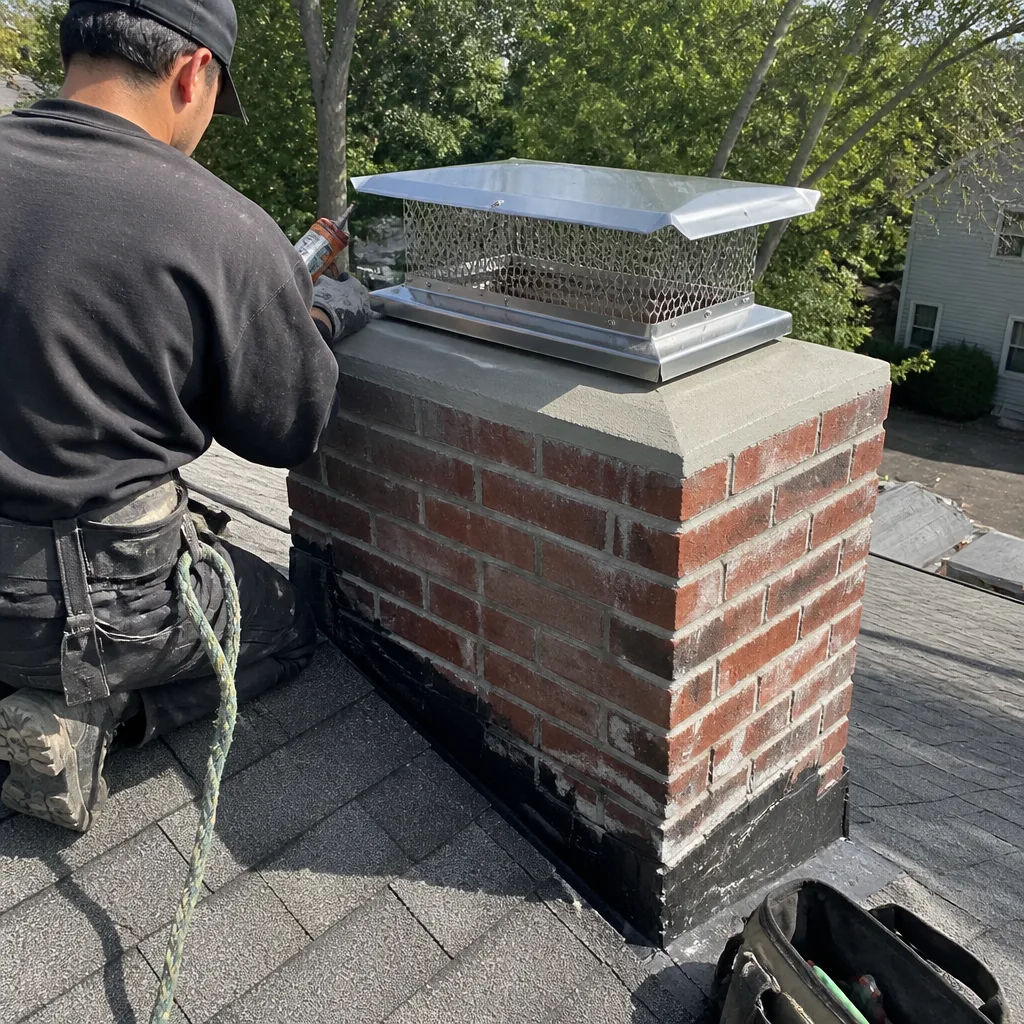
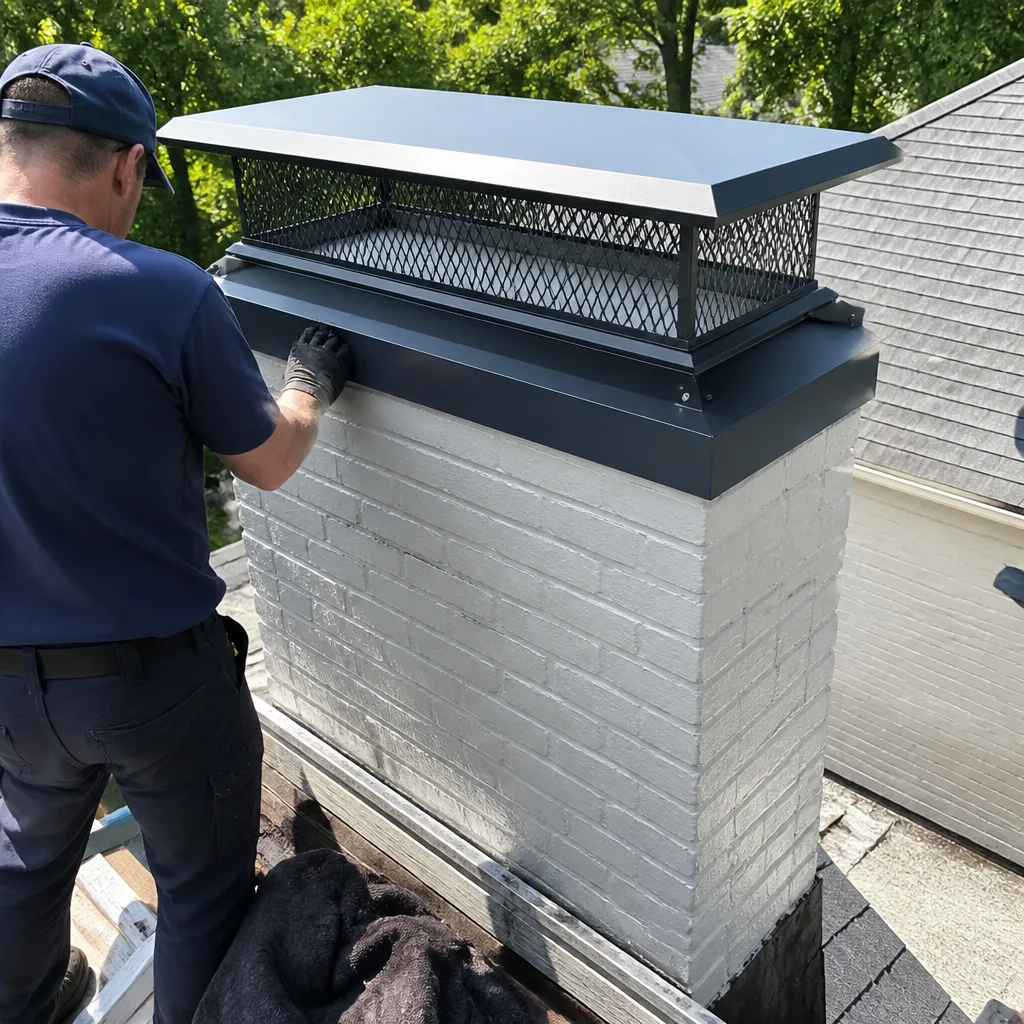
Level 1 sweep and inspection to the NFPA 211 annual standard - flue, crown, cap, and flashing checked and photographed
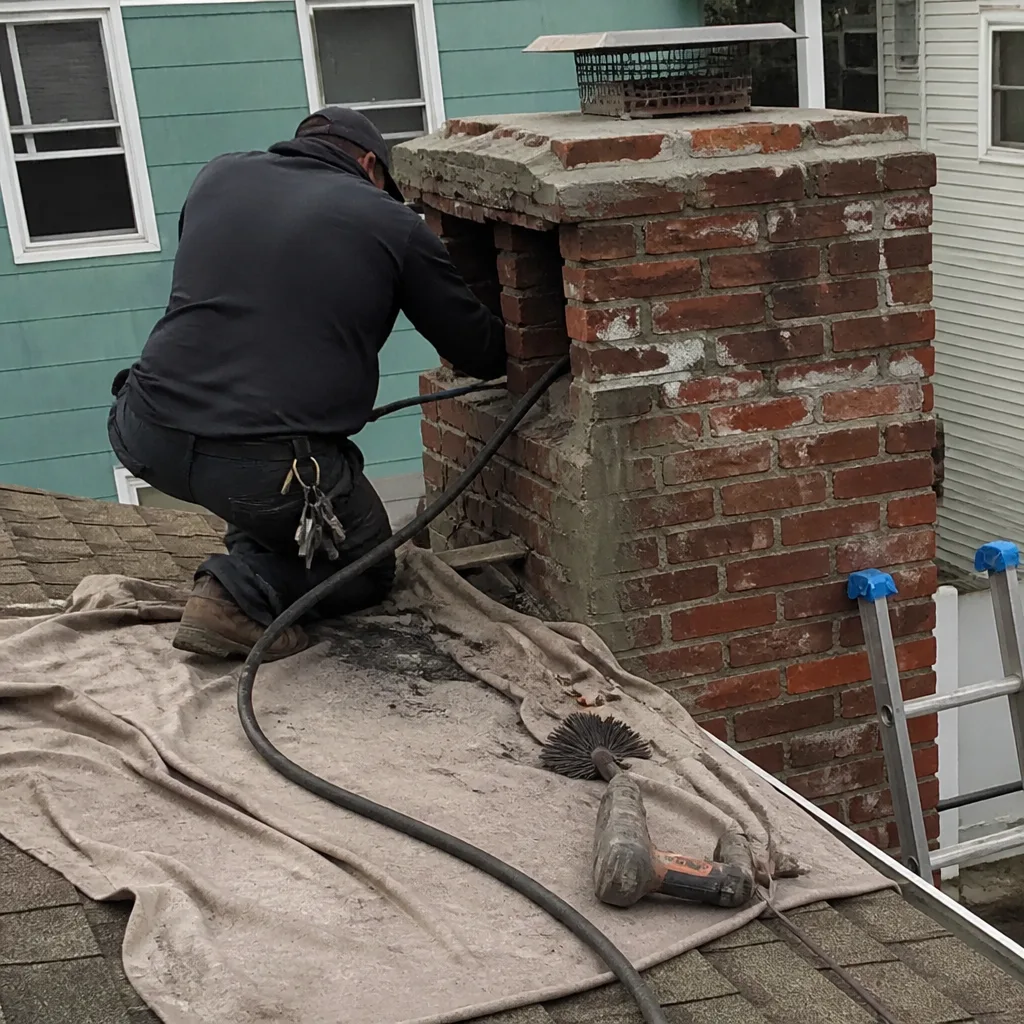
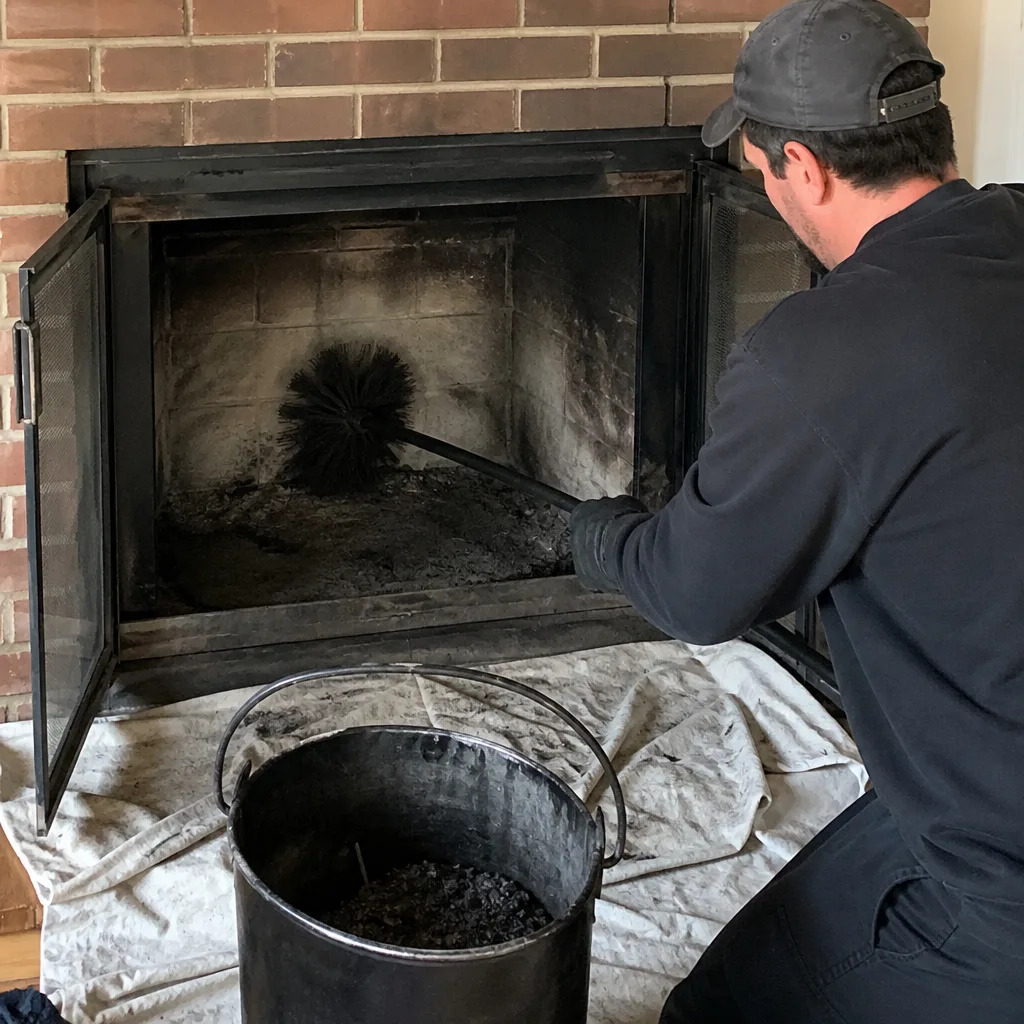
Chimney sweep logs do not sweep chimneys. They loosen some creosote - which then falls where a brush and vacuum still have to collect it.
 Before
 After
After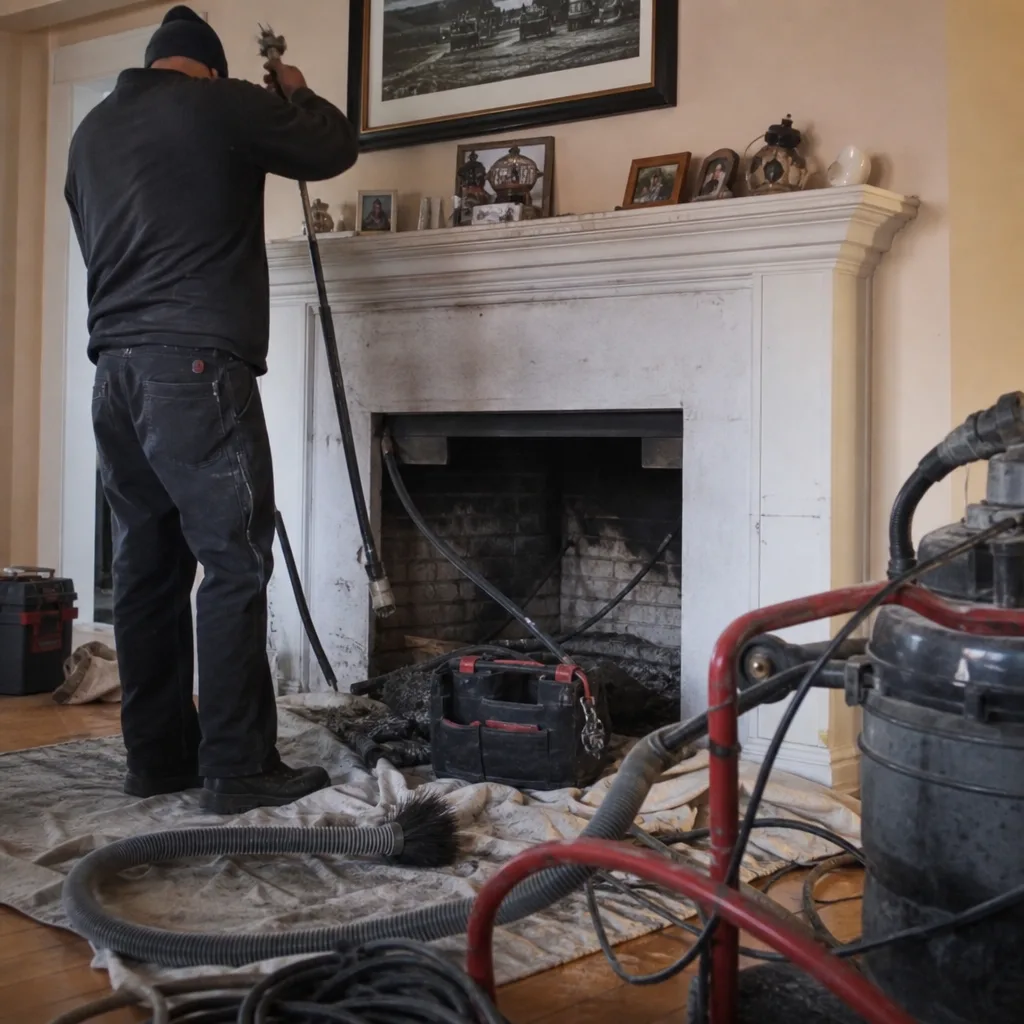 Before
 After
After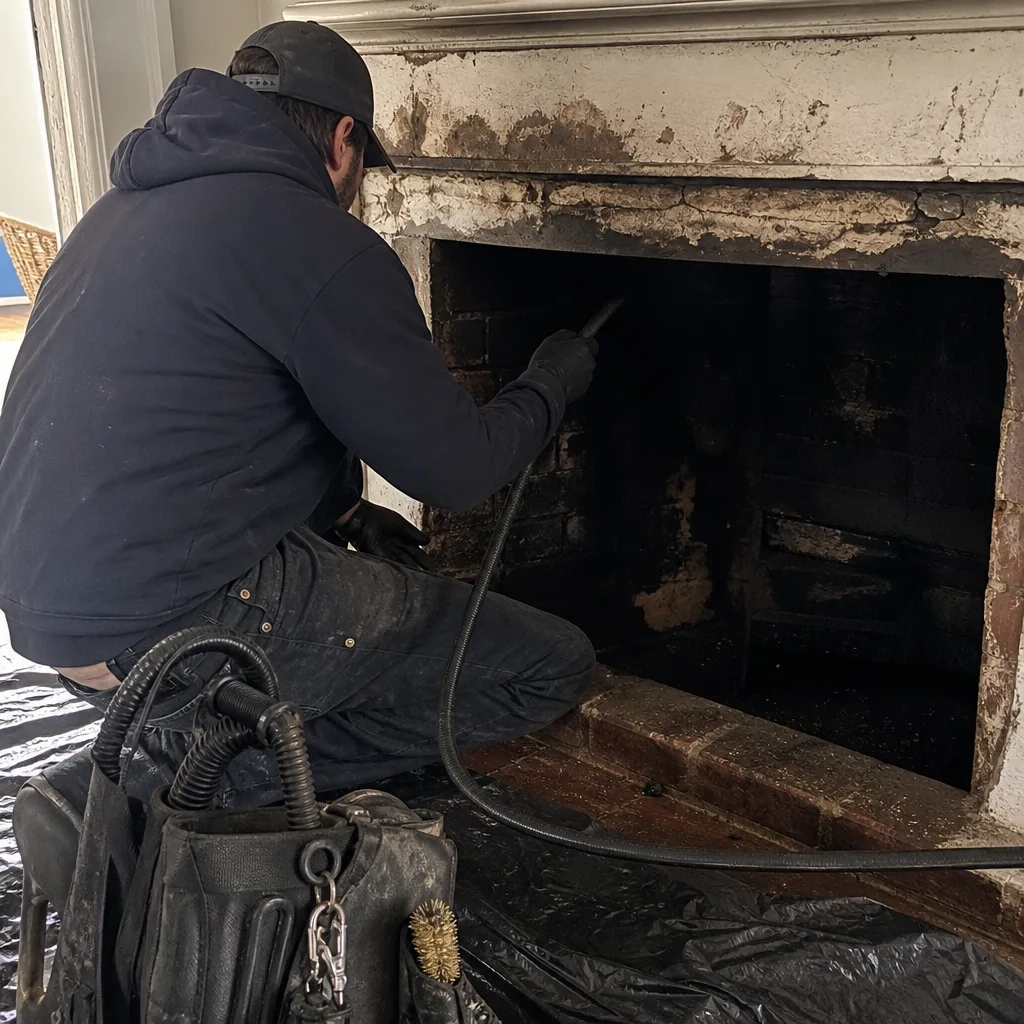 Before
 After
AfterHeatShield Chimney Cleaning & Sweep in New York: What to Know First
HeatShield chimney cleaning and sweep in New York runs $189 to $289 for a standard Level 1 sweep, and $349 to $499 when we take the camera down for a Level 2 inspection of a HeatShield-lined flue in a brownstone or prewar building. We’re an independent HeatShield service provider, not a manufacturer-authorized shop, which means we tell you what the liner actually needs, not what a warranty script tells us to say. If you own a HeatShield system and need it swept, inspected, or evaluated, call (551) 213-5548 and we’ll schedule a tech with a written price before anyone touches the flue.
This page is for New York homeowners who bought a house or condo with a HeatShield liner already installed, or had one put in, and now need someone who knows how to clean it without voiding the warranty or missing what’s failing inside. Corrine Halstead has been reading HeatShield liners with a camera since they first started showing up in New York chimneys, and she trains every Level Two tech to treat a HeatShield job as its own animal, because it is.
How HeatShield Products Fail - and How We Fix Them
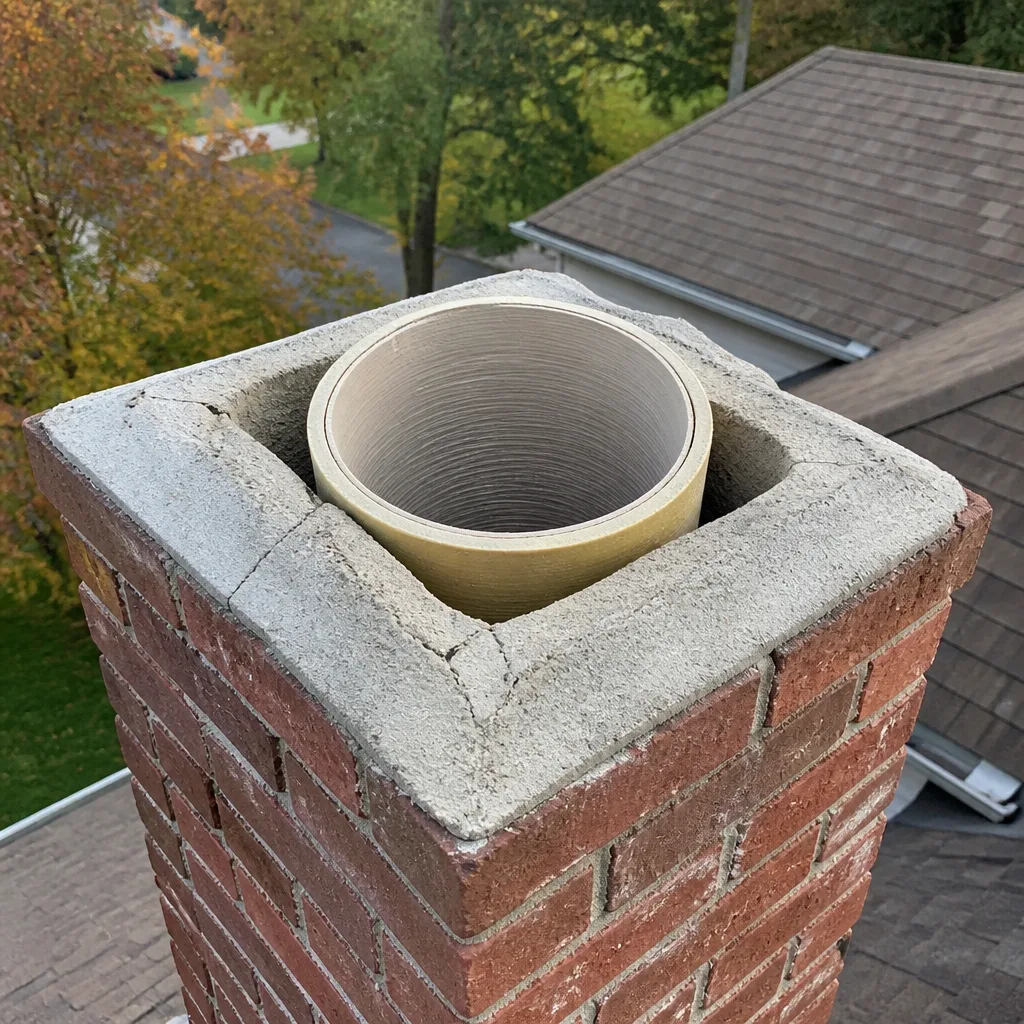
HeatShield is a cementitious resurfacing system, not a solid flue liner. It’s applied as a slurry mix, usually over an existing clay tile liner or directly onto masonry. That matters because failure looks different than a cracked tile or a rusted stainless liner. Here’s what we actually find in New York chimneys:
- HeatShield Cerfractory Flue Sealant delamination. The Cerfractory line, commonly used for parging smoke chambers and sealing flue interiors, can separate from the substrate when moisture gets behind it. Freeze-thaw cycles in New York make this worse. During a sweep, we’ll see patches where the coating has lifted and flaked. The fix is mechanical removal of the loose material, a moisture assessment, and recoating only if the substrate is sound. If we find water intrusion at the crown, recoating is a waste of your money and we’ll say so.
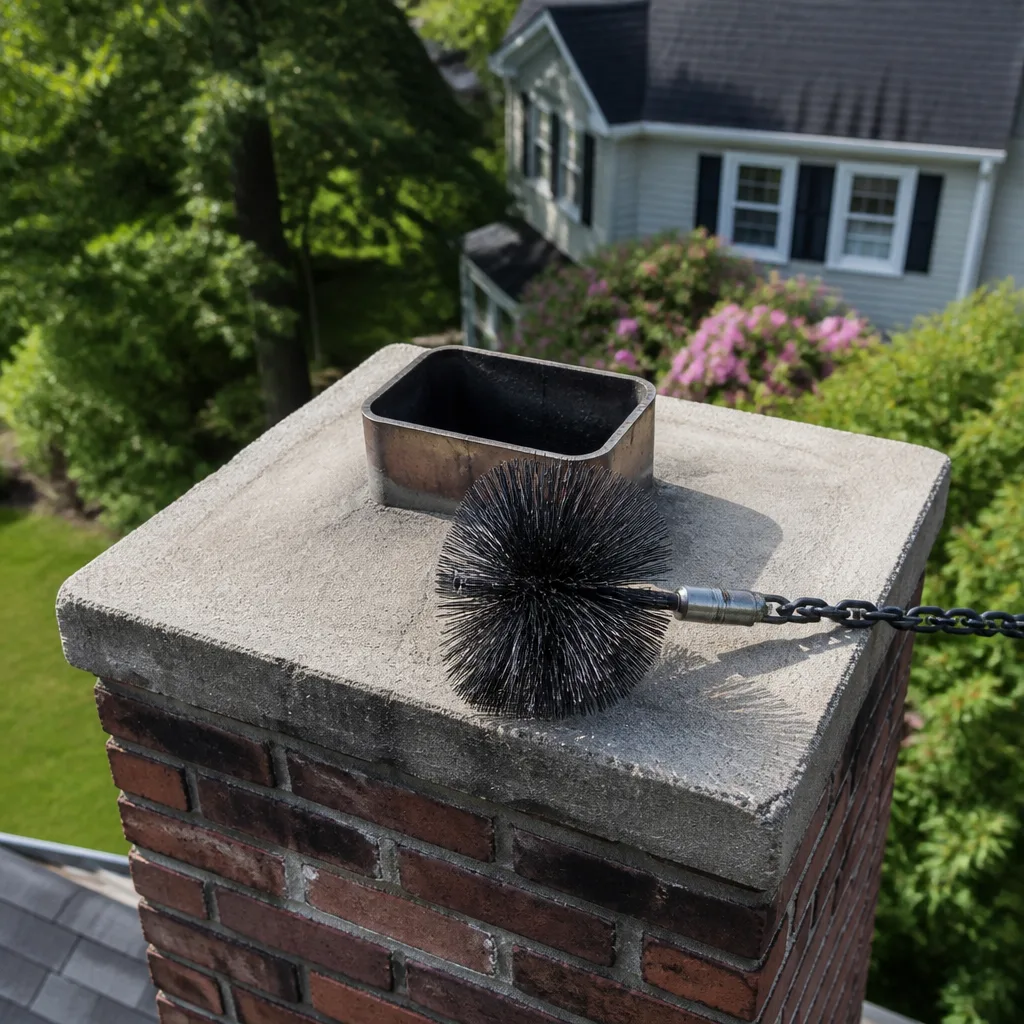
- HeatShield Joint Repair System failure at clay tile joints. This is the specific HeatShield application designed to seal the seams between clay tiles. When we see creosote buildup concentrated at those joint lines, it tells us the sealant has thinned or cracked. A standard sweep with a poly brush won’t reach into those recessed joints. We use rotary whip heads in flues with HeatShield coatings, not because it’s faster, but because the whip gets into the joints where the failure starts. After we’re done, the camera photo record shows the joint condition in plain view.
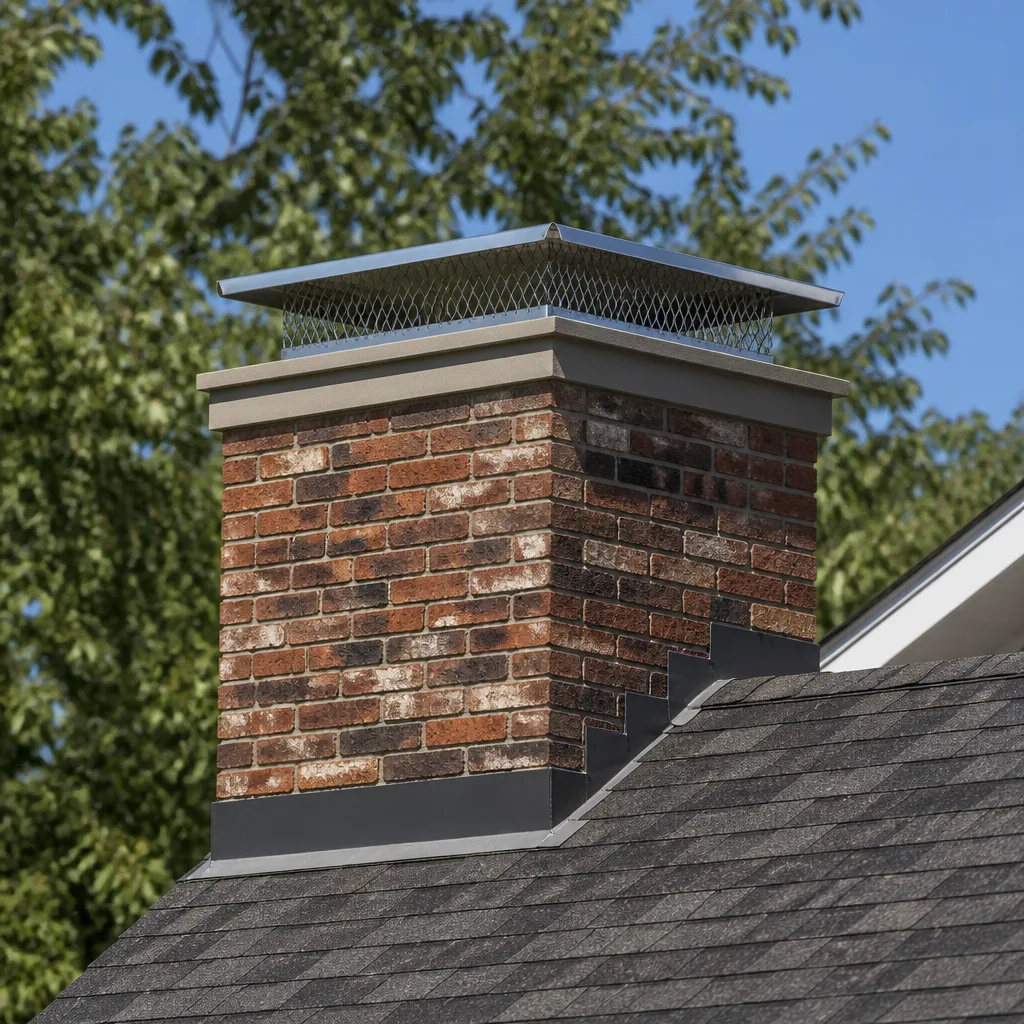
- HeatShield liner in a flue with an undersized or missing cap. HeatShield coatings don’t fail on their own as often as they fail from water. A missing chimney cap on a HeatShield-lined flue in a New York rainstorm means water runs down the coating face. You’ll see efflorescence, white mineral staining, on the coating surface. That’s our signal to check the cap and crown before we discuss liner condition. We carry DuraFlex and Gelco caps on the truck, and we’ll quote a replacement in writing on the spot if needed.
- Creosote bonding differences on Cerfractory surfaces. HeatShield’s surface is rougher than a metal liner, and creosote adheres differently. We’ve found Class III creosote, the hard, glazed stage, forming on HeatShield liners in fireplaces that burn unseasoned wood or see heavy use. A standard wire brush won’t touch it. We use chemical creosote treatment followed by aggressive mechanical removal, and we document the before and after because that’s the only way you’ll know it’s actually gone.
- Smoke chamber HeatShield parging cracking at the throat. If HeatShield was applied to the smoke chamber during an installation, the throat area, right above the damper, is the first place we see hairline cracks. That’s a thermal expansion issue. During a fireplace cleaning, we run the camera up through the throat and photo-document that area specifically. If the cracking is superficial, we note it in the written report and monitor it. If it’s structural, you get a repair scope and a written price before any work is scheduled.
Our HeatShield Chimney Cleaning & Sweep Process
Here’s how a HeatShield cleaning and sweep job goes with us, from the phone call to the cleanup:
- 1
Call and schedule. You call (551) 213-5548. A live person answers, 24/7, and we ask what kind of liner you have and when it was last swept. We’ll text you when the tech is on the way.
- 2
On-site walkthrough and written price. The tech arrives in uniform, with a license number visible. Before any equipment comes off the truck, you get a written price and scope for the cleaning, under Haven Standard Clause 1. If the camera inspection finds something beyond the scope, you get a second written price before that work happens. Never a surprise.
- 3
Camera inspection down the flue. This is the part HeatShield owners specifically need. We run the NFPA 211 Level 2 camera down the flue and capture the condition of the HeatShield coating, the joints, the smoke chamber, and the crown from below. The camera doesn’t argue with you, and neither does the price sheet. You see the footage. It’s your chimney.
- 4
Mechanical cleaning matched to your HeatShield surface. We select brushes and rotary heads based on what the camera showed. Creosote class determines chemical treatment. No shortcuts on a coated flue, because gouging a Cerfractory surface with the wrong brush creates a new problem we didn’t have before.
- 5
Documented photo record. You get before and after photos from the flue camera, a written report of what we found, and a written warranty on the cleaning itself. Haven Standard Clause 4 requires it, and we’ve been doing it since 2009, which is longer than most New York companies have owned a flue camera.
- 6
Cleanup and next steps. We leave the hearth cleaner than we found it. If there’s a follow-up item, like a crown repair or a cap replacement, you’ll have the written scope in hand and the decision is yours, no pressure from us.
BeforeAfterWhat HeatShield Chimney Cleaning & Sweep Costs in New York
Here’s what you should expect to pay in New York for HeatShield chimney cleaning and sweep work. These are real ranges, not call-for-a-quote vagueness:
| Service | Price Range |
|---|---|
| Level 1 HeatShield sweep, standard fireplace | $189 - $229 |
| Level 1 HeatShield sweep, wood stove or insert | $229 - $279 |
| Level 2 camera inspection with HeatShield coating assessment | $349 - $499 |
| Creosote removal, Class III glazed (chemical + mechanical) | $150 - $300 add-on |
| HeatShield smoke chamber evaluation and minor parging | $400 - $950 |
| Chimney cap replacement (DuraFlex or Gelco, installed) | $285 - $575 |
What moves the price in New York: roof access (a five-story walk-up in Park Slope with a steep pitch costs more than a single-story unit in Riverdale), creosote stage, and whether the HeatShield coating needs spot repair versus a full reevaluation. If you bring us a competitor’s written estimate, we’ll give you a free second opinion on it, and we’ll match or beat a legitimate written price for the same scope. Call (551) 213-5548 for an exact quote, in writing, before any work starts.
Why New York Homeowners Call Level Two Chimney New York for HeatShield Work
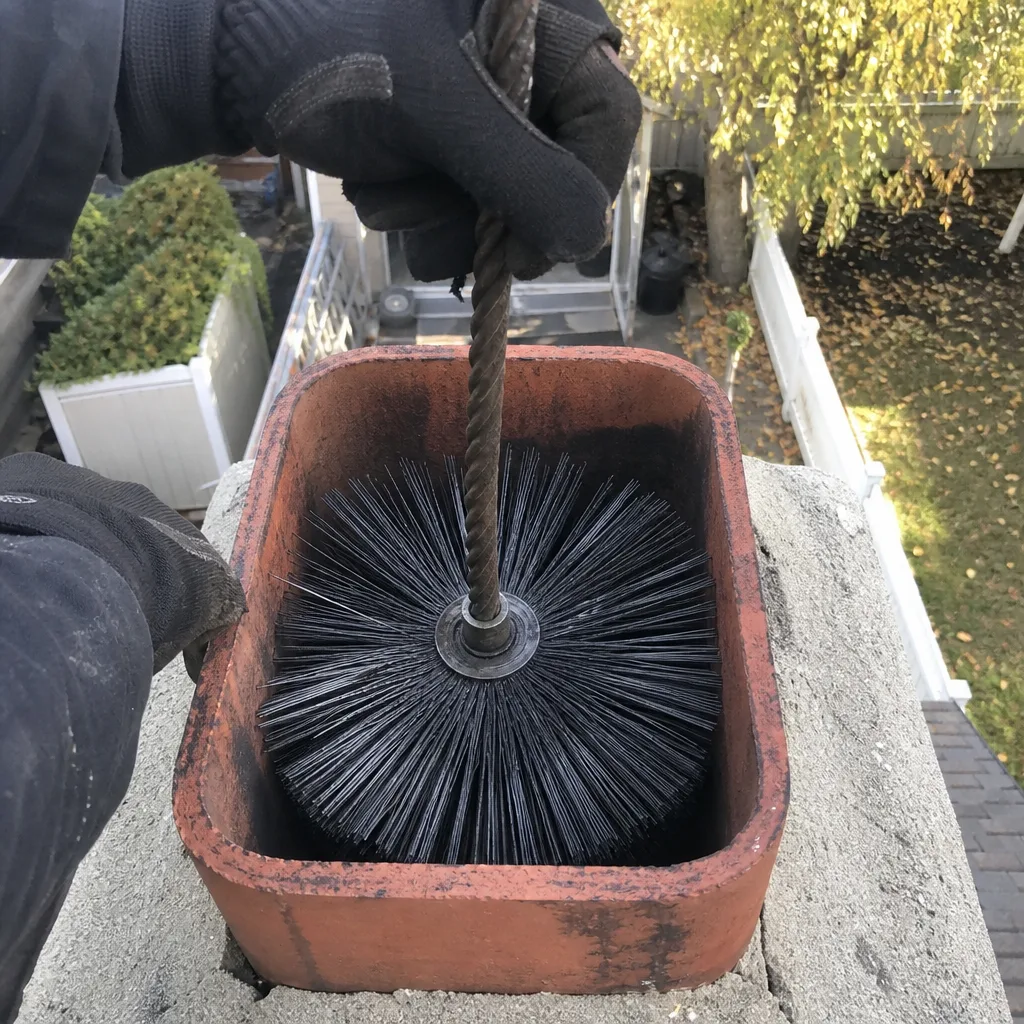
Most New York chimney companies clean tile liners and stainless liners. HeatShield is a different material with different failure modes, and we’ve been documenting those failures with a camera since 2009. That’s 38,000-plus inspections and cleanings where the customer got a written price before work started and a photo record when it was done. We don’t ask you to trust us. We ask you to look at the footage.
Our techs are background-checked, uniformed, and trained specifically on cementitious liner systems before they ever touch a HeatShield job on their own. When a HeatShield liner is beyond repair and a full replacement is the honest answer, we work with DuraFlex and Gelco products as well, so you’re not locked into a single-material recommendation. We quote what the flue needs, not what our inventory says we should sell you. The 365-Day Done Right Promise backs every cleaning: if it’s not done right, we make it right, no argument.
Live phone support runs 24/7. When a New York homeowner calls at 11 p.m. because smoke just filled the living room, a person answers. That’s the job.
FAQs
No. Regular professional chimney cleaning is required by HeatShield’s warranty terms, not prohibited by them. What voids a HeatShield warranty is damage from improper cleaning methods, like using a metal scraper on a Cerfractory coating. We document our cleaning method and brush selection in the written report, so if a warranty claim ever comes up, you have the paper trail. Call (551) 213-5548 to schedule a warranty-safe HeatShield sweep.
Every year if you burn regularly, or every cord of wood burned, whichever comes first. New York’s humid summers let creosote absorb moisture and become more corrosive during the off-season, so a fall sweep is the minimum for HeatShield liners, and a spring camera check catches water damage before it becomes a full liner failure. Call (551) 213-5548 to book your annual HeatShield cleaning.
Often, yes, we can repair it. HeatShield’s Cerfractory and joint sealant products are designed for spot repair and recoating, and we use them that way when the underlying substrate is sound. But if water intrusion has saturated the coating or the structural masonry behind it is failing, patching is throwing money at a problem that needs a crown repair or a full rebuild first. The camera tells us which one you have. Call (551) 213-5548 for a written assessment.
A Level 1 is a visual check of the accessible parts of the system during a routine sweep. A Level 2, which is what we do with the camera down the flue, inspects the entire interior surface of the HeatShield coating, the joints, the smoke chamber, and the crown area. If you just bought a New York house with a HeatShield liner, or you’re changing fuel type or appliance, Level 2 is the one you want. We include a photo record with every Level 2. Call (551) 213-5548 to schedule.
Rain smell in a chimney usually means water is getting in and reacting with creosote residue on the coating surface. In New York, that’s most often a failed crown or a missing cap, not a HeatShield material problem. We’ll camera the flue, check the crown and cap, and give you a written answer with a written price if work is needed. Call (551) 213-5548 and we’ll get to it.
Written by Corrine Halstead, Owner, Level Two Chimney New York at Level Two Chimney New York, serving New York and nearby areas.