
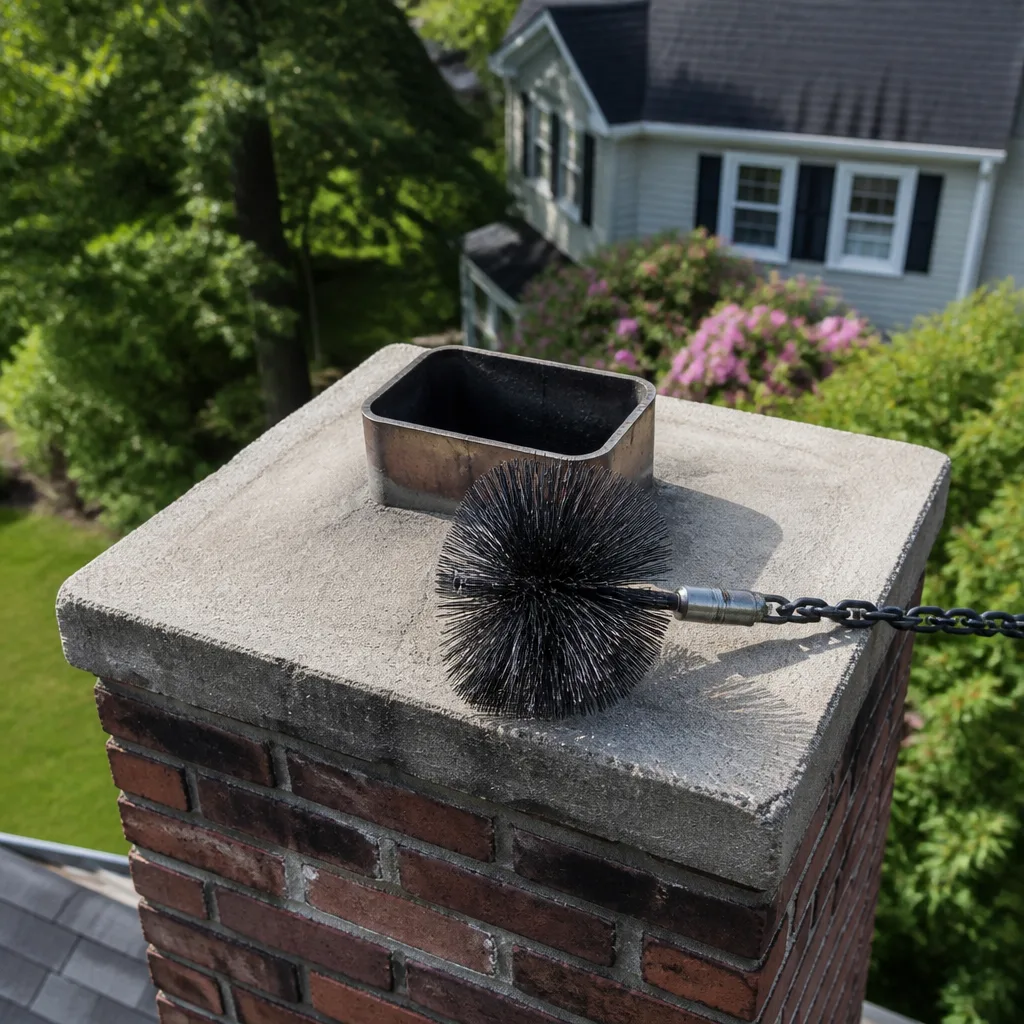
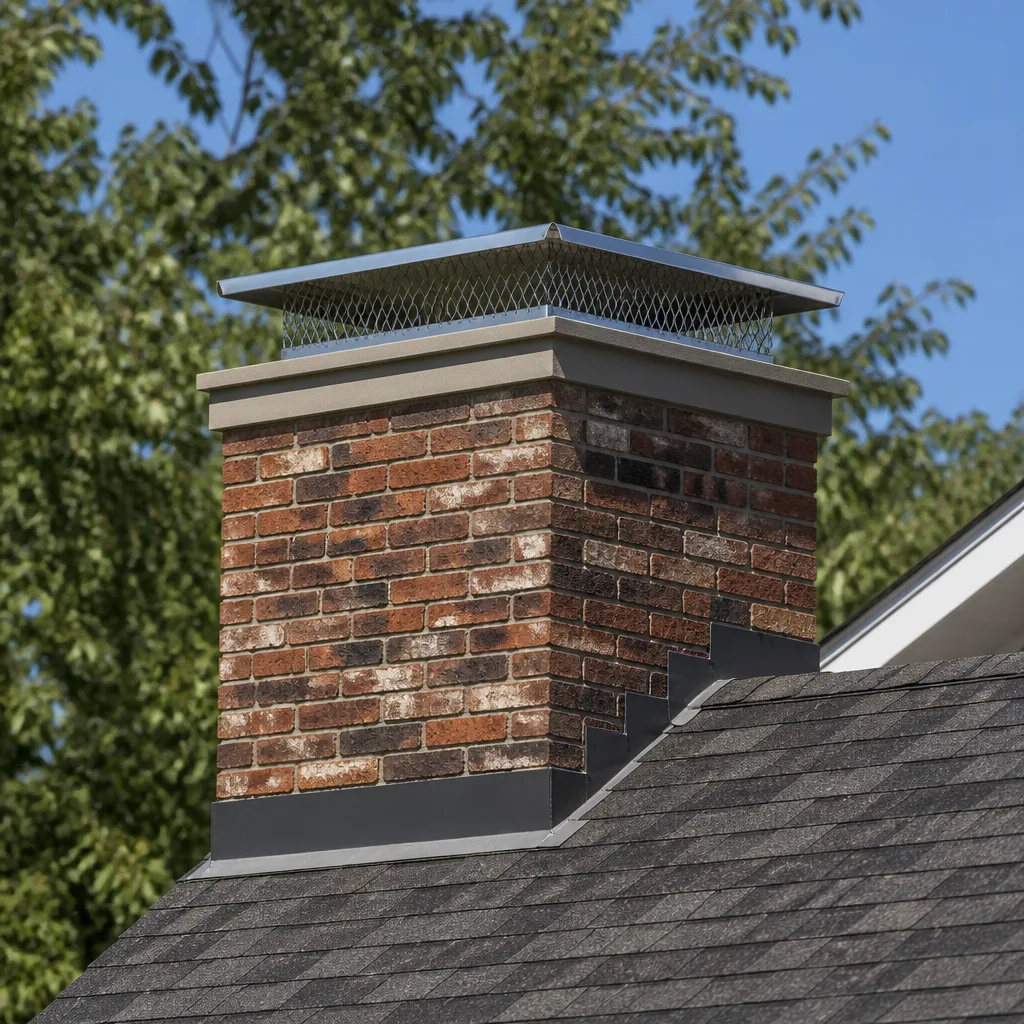
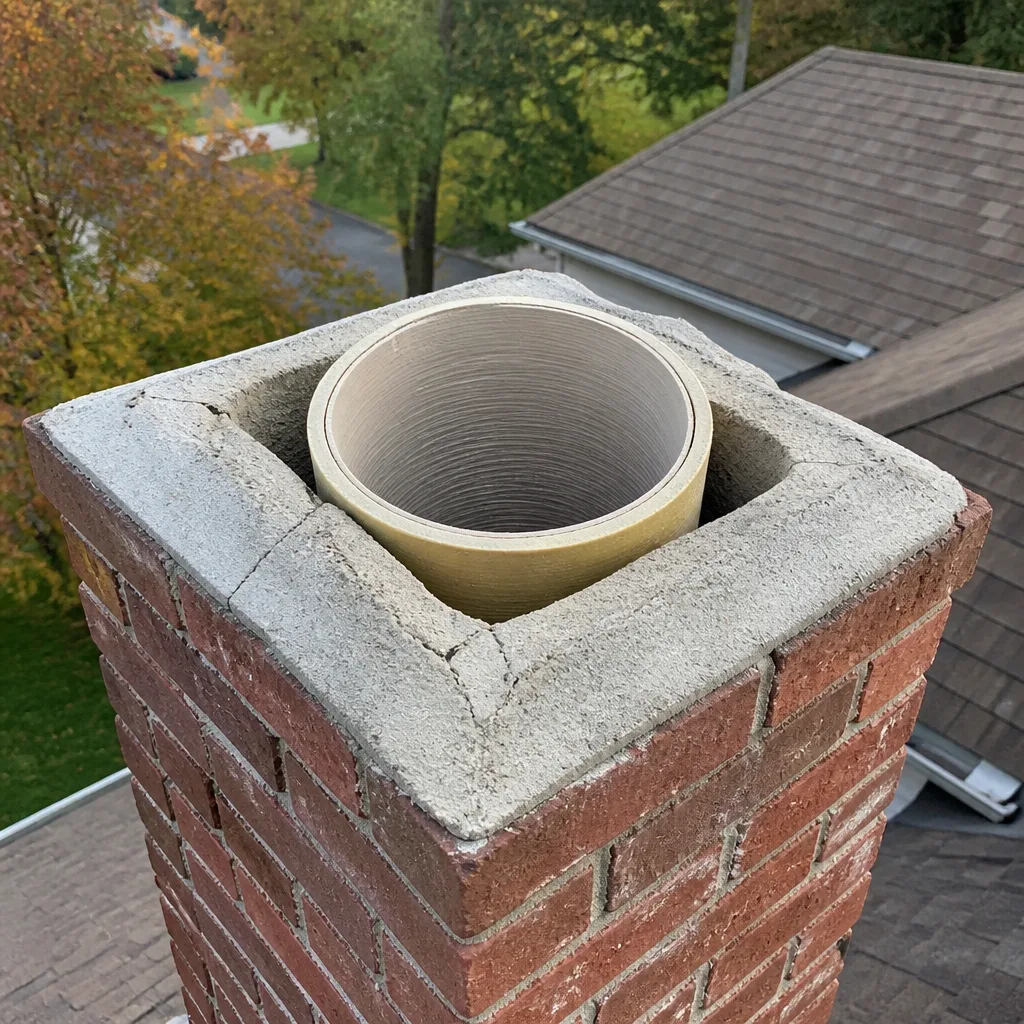
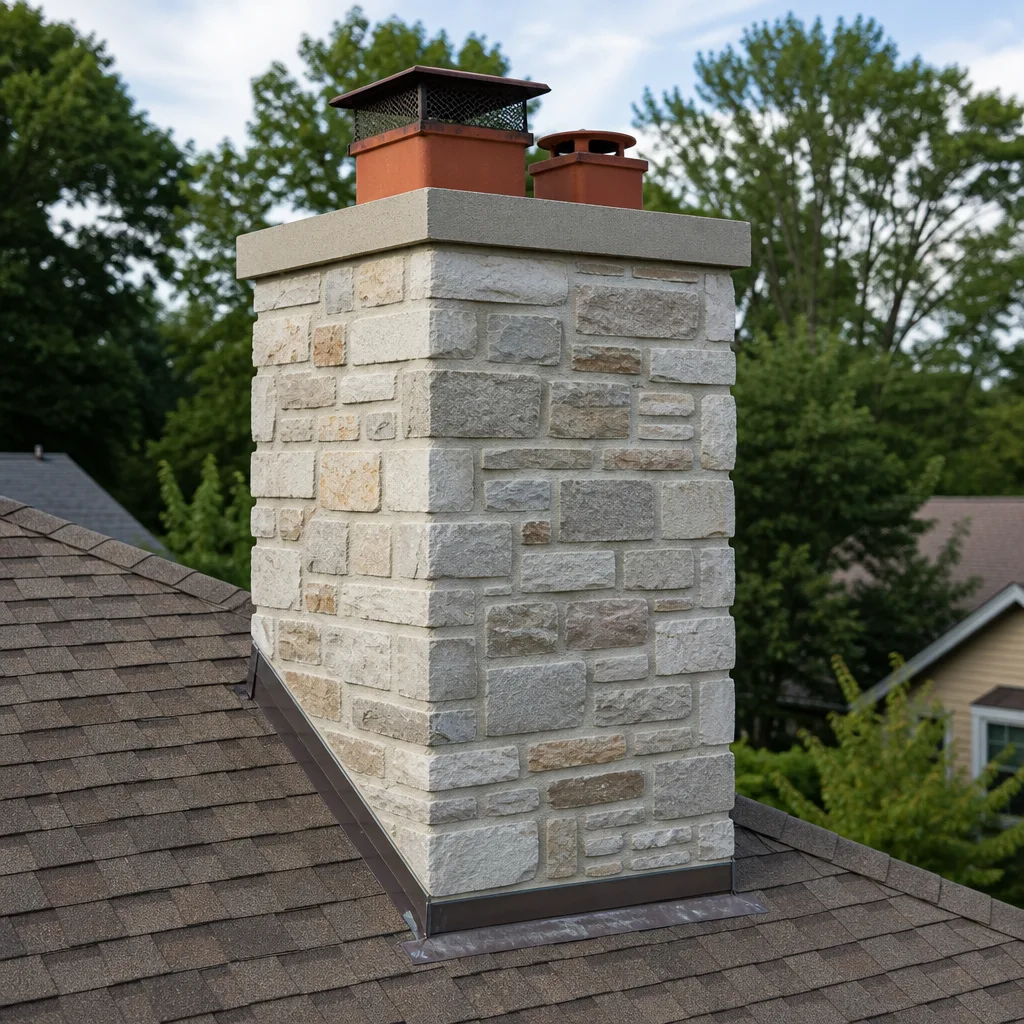
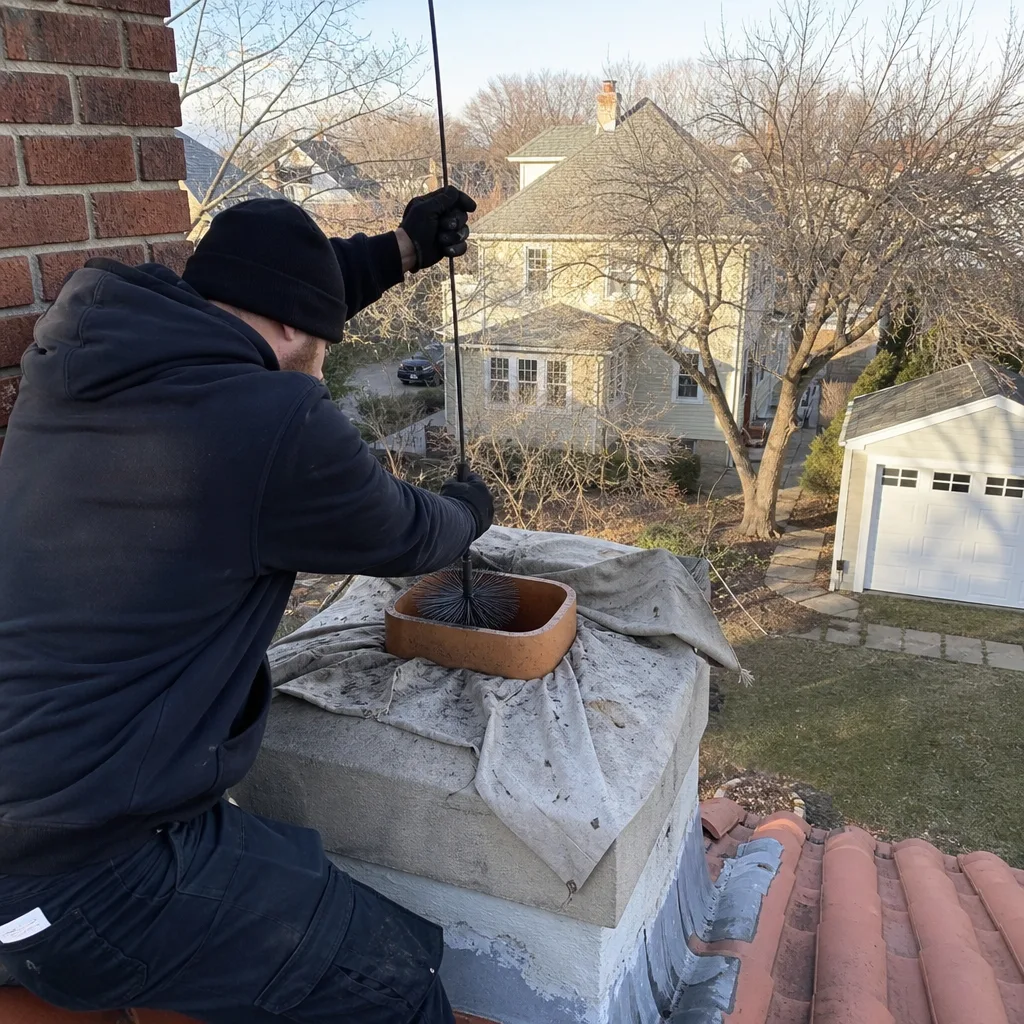
Level 1 sweep and inspection to the NFPA 211 annual standard - flue, crown, cap, and flashing checked and photographed
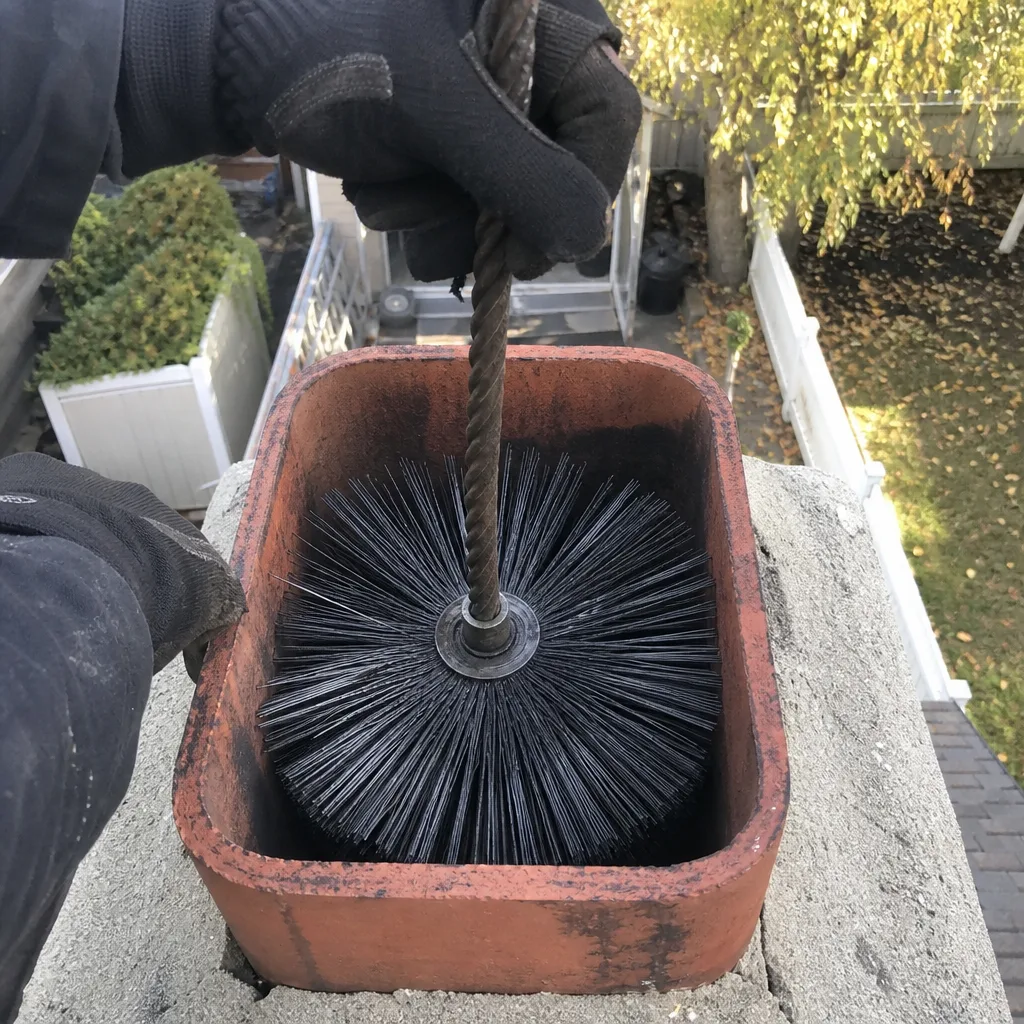
Chimney sweep logs do not sweep chimneys. They loosen some creosote - which then falls where a brush and vacuum still have to collect it.
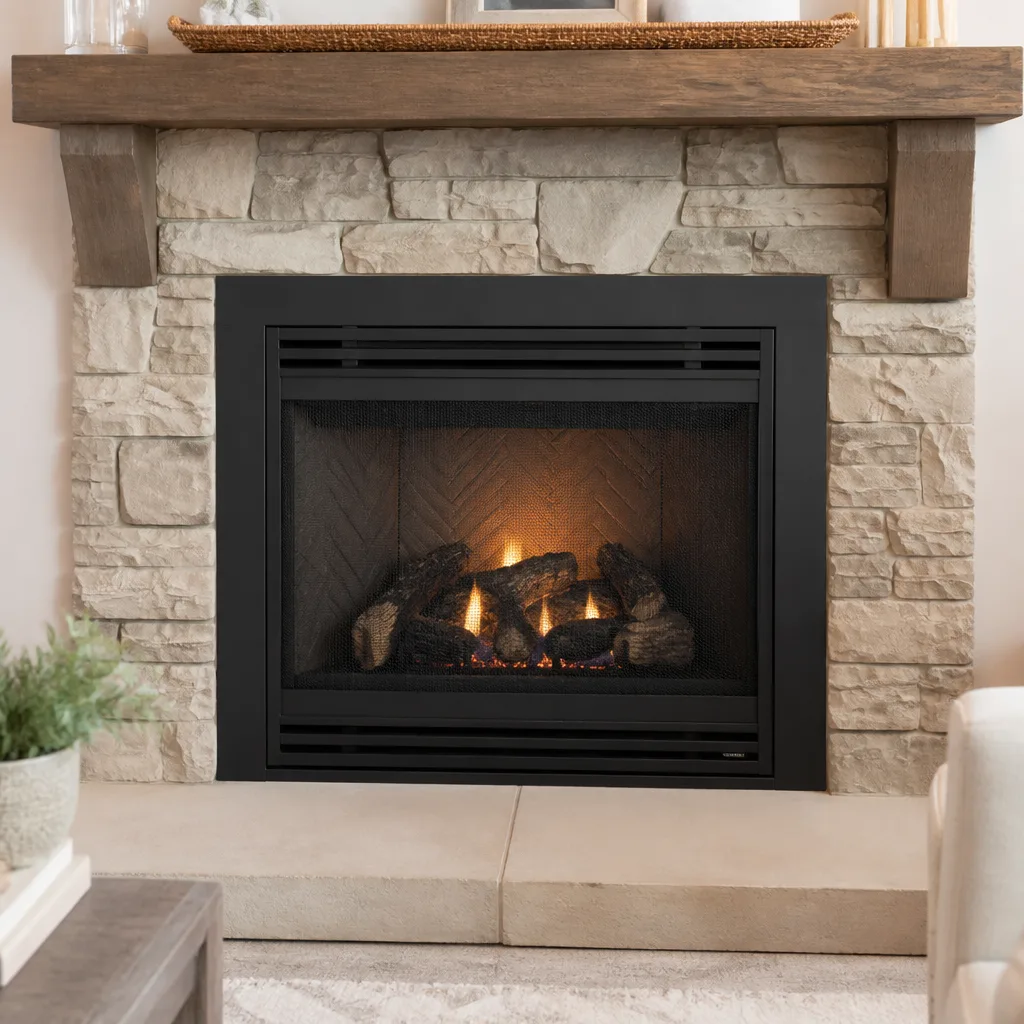
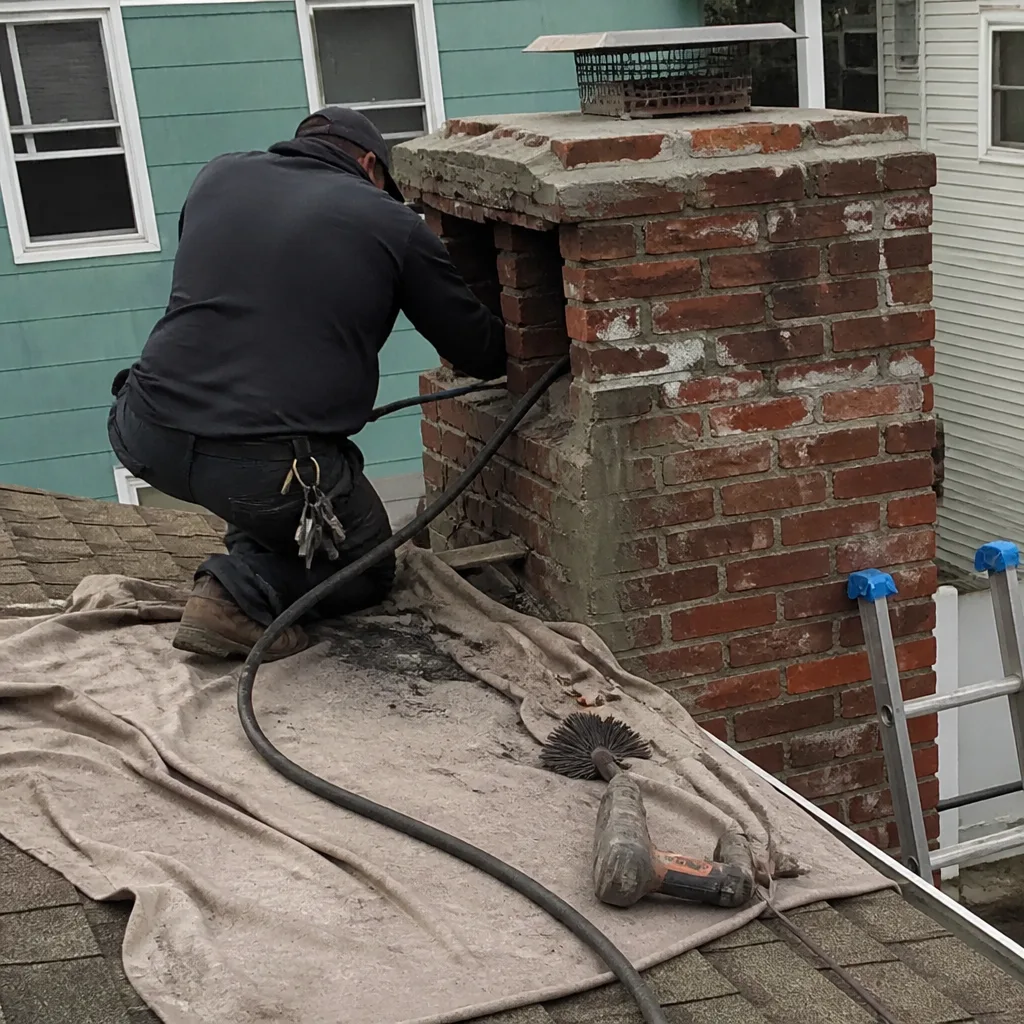 Before
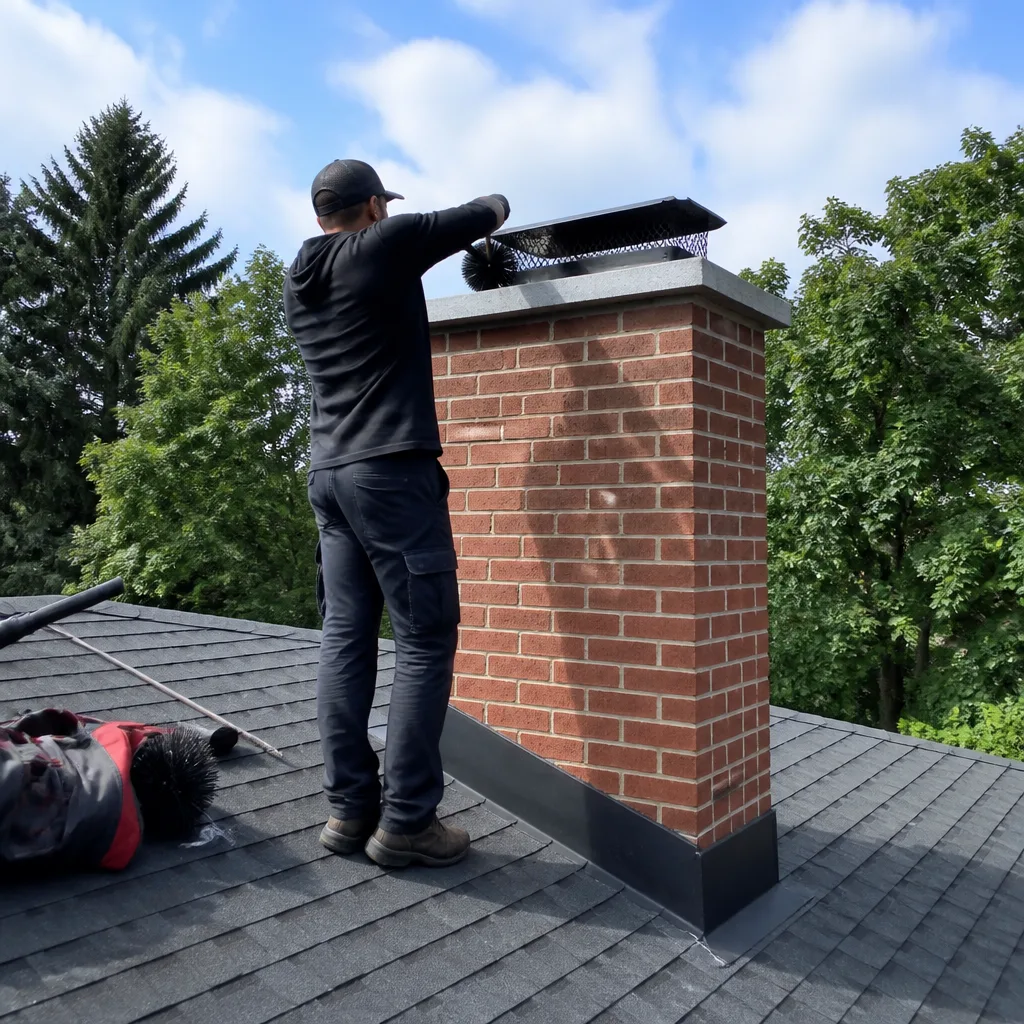 After
After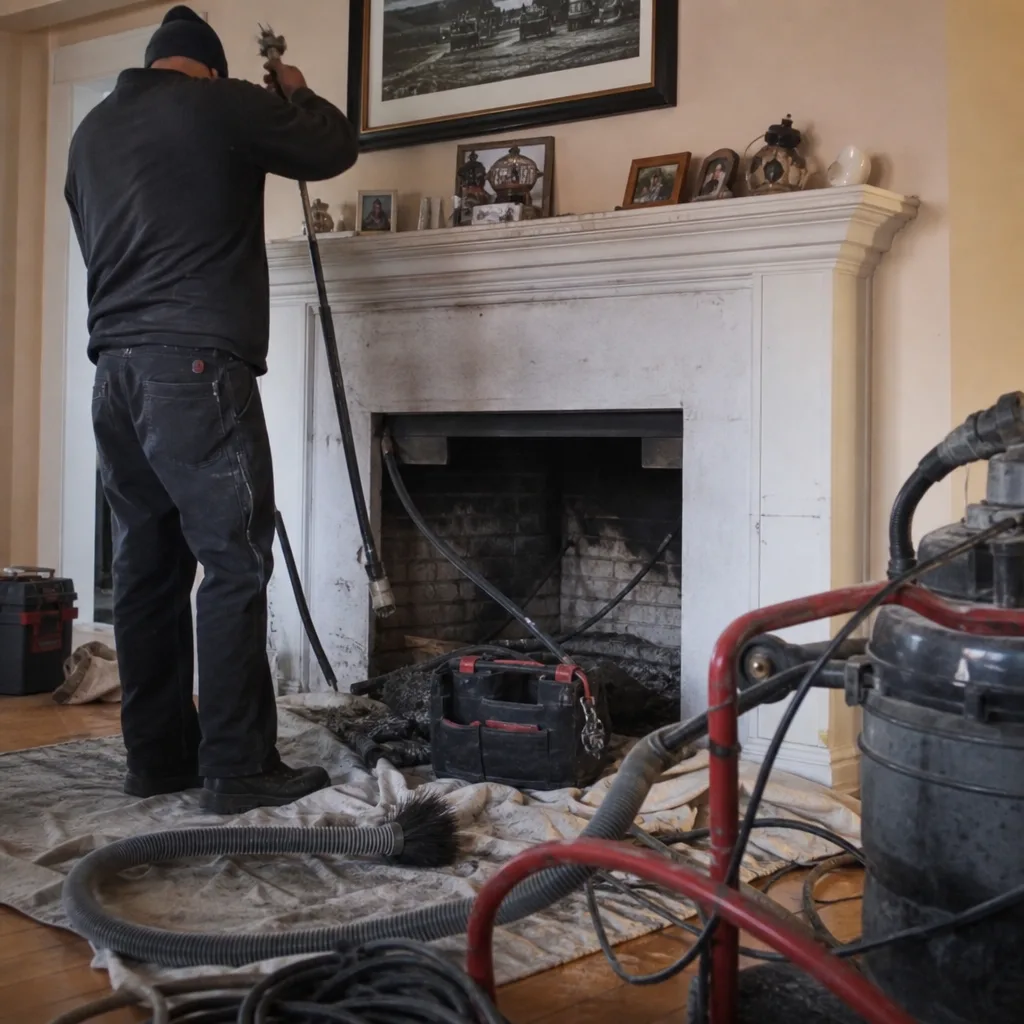 Before
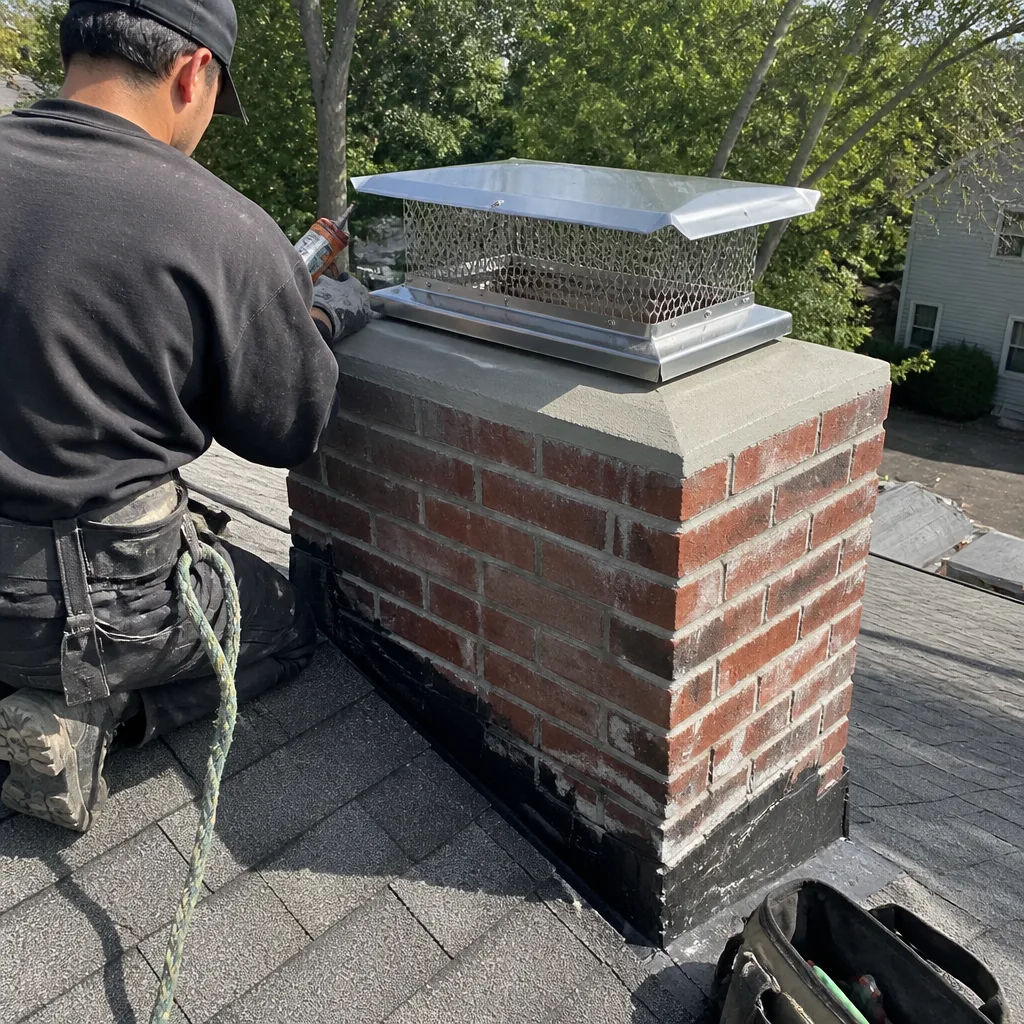 After
After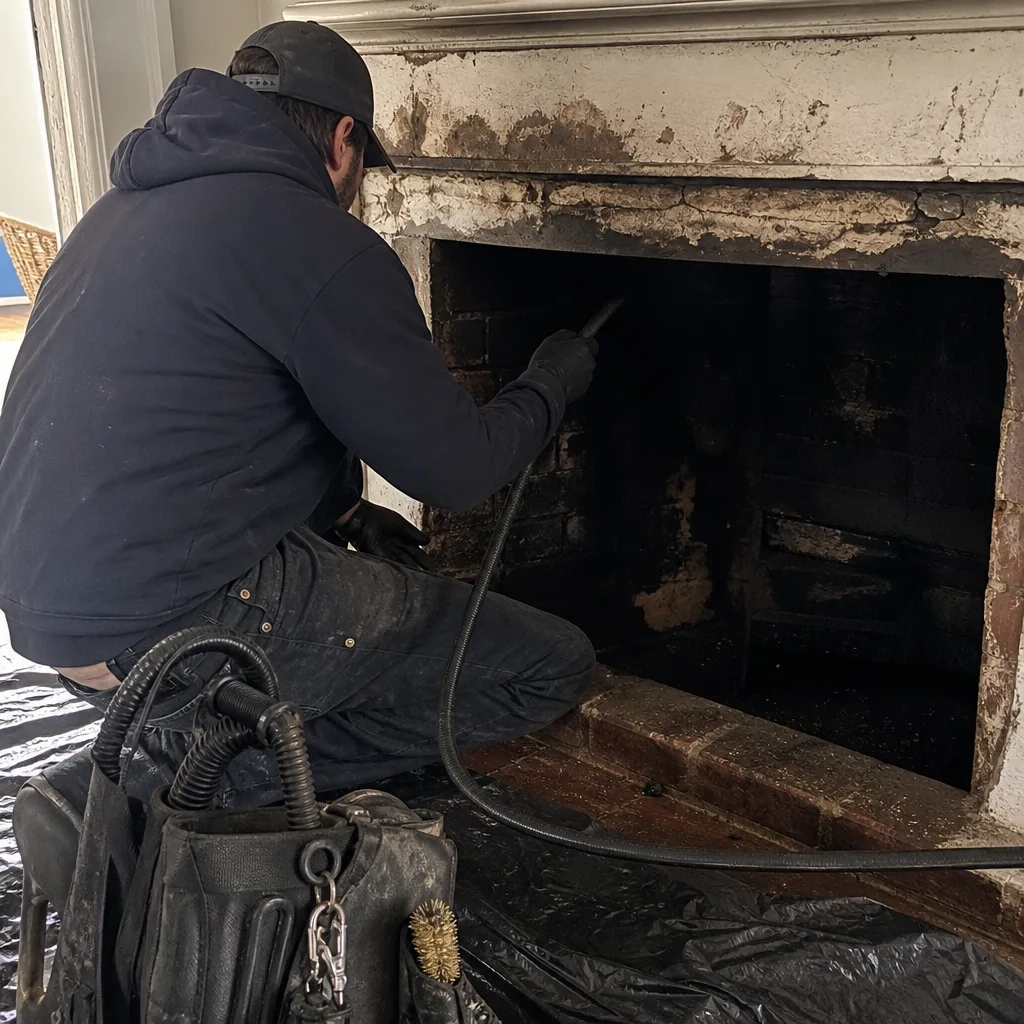 Before
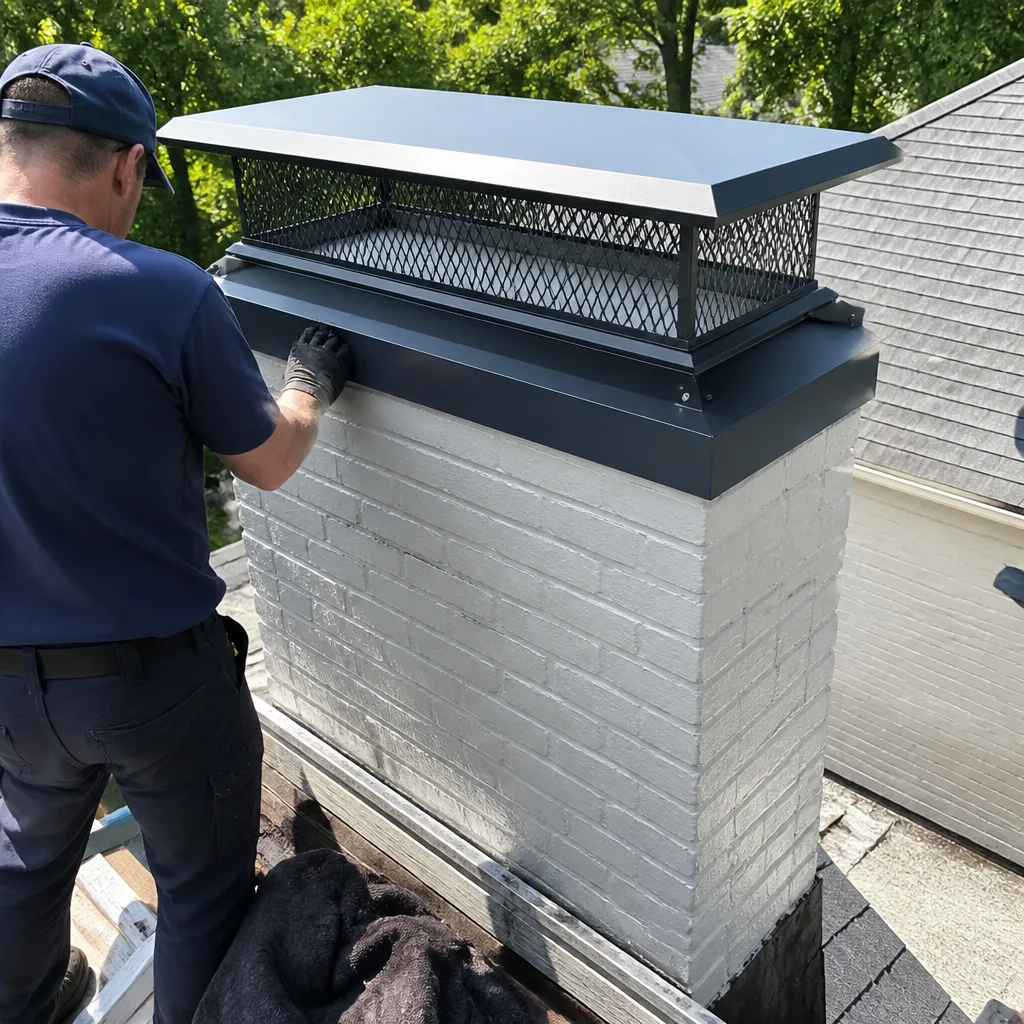 After
AfterMortar Repointing in New York, NY
Mortar repointing in New York typically costs between $400 and $1,800 depending on chimney height, brick count, and how far the mortar has deteriorated. Most jobs in New York are completed in a single visit, with a written price delivered before any work starts. If you’re seeing crumbling joints, white staining on the brick face, or water inside the firebox after rain, the mortar between your chimney bricks is the most likely cause – and repointing stops that damage before it reaches the flue liner or the masonry behind the face.
At Level Two Chimney New York, mortar repointing is part of our broader Chimney Repair in New York work. We’ve been documenting chimney condition with camera equipment since 2009, and repointing is one of those services where photographic documentation matters most: joints that look surface-worn from the ground can be significantly deeper when you get close. We send a background-checked, uniformed technician, give you a written scope and price before they touch anything, and back the work under our 365-Day Done Right Promise. To get a written estimate without any obligation, call us at (551) 213-5548.
What Mortar Repointing Actually Does
The mortar joints between chimney bricks are not decorative. They seal the masonry against water, hold the brick courses in alignment, and keep combustion gases inside the flue where they belong. Portland-cement-based mortar has a service life of roughly 20 to 30 years under normal conditions. In New York, where freeze-thaw cycles in neighborhoods like Riverdale, Flatbush, and Forest Hills run 90 to 120 times per winter, that lifespan shortens. Water enters a hairline crack in October, freezes in December, expands, and by March that crack is three times wider. A few seasons of this and the joint is gone entirely.
Repointing – sometimes called tuckpointing, though technically that term refers to a two-color finish technique – is the process of cutting out the degraded mortar to a controlled depth and packing new mortar in. The new mortar creates a fresh weather seal and restores the structural relationship between the brick courses. It is not patching over the old mortar; surface patching fails within a season. Cutting out and replacing is the only repair that holds.
Neglected joints lead directly to Spalling Brick Repair, which is when water behind the brick face freezes and pops chunks of brick off the face. Once bricks spall, the repair cost increases significantly because you are now replacing masonry units, not just mortar. Repointing done at the right time – when joints are recessed but bricks are still intact – is one of the most cost-effective chimney repairs available.
When You Need Mortar Repointing
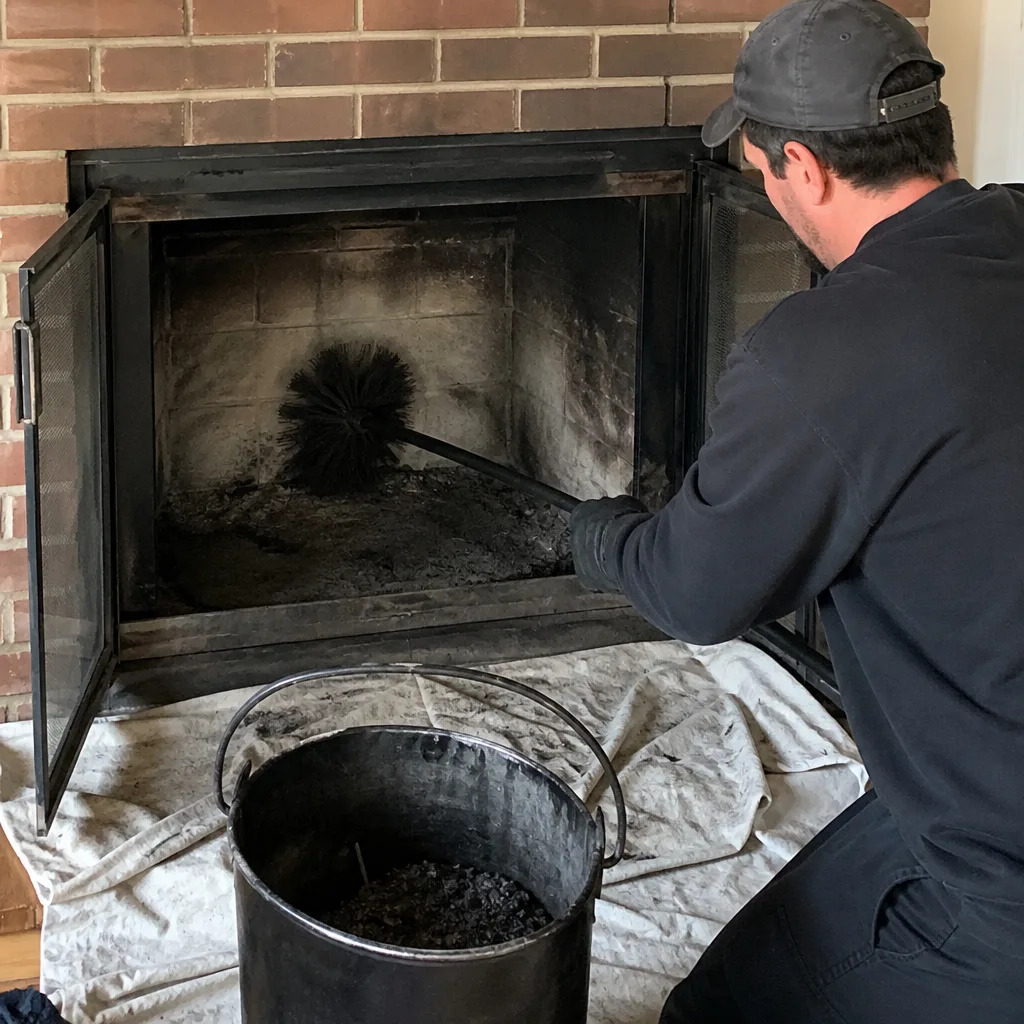
- Joints visibly recessed more than a quarter inch. Run your finger along the mortar line. If the mortar sits more than roughly a quarter inch behind the brick face, water is already collecting in that channel and freeze-thaw damage is accelerating.
- White efflorescence on the chimney exterior. That chalky white staining is mineral salt being carried outward by water moving through the masonry. It means water is penetrating the joints regularly – often from the top of the stack where mortar deteriorates first due to direct exposure.
- Water in the firebox after rain, no crown damage. In New York brownstones and pre-war buildings, the crown and cap often look intact from the street, but failed side joints are the actual entry point. If the crown has been ruled out and water still appears at the firebox floor, the stack joints are the next logical suspect.
- Brick faces starting to flake or chip. Early spalling is a signal that water has already moved behind the face. At this stage repointing can still stop the progression, but the window is closing. Left another season, you’re looking at brick replacement alongside mortar work.
- Visible gaps or missing mortar on the upper courses. The top three to five courses of a New York chimney take the most weather punishment. Missing mortar at that level lets rainwater run straight down the interior of the stack, which damages the smoke chamber and, eventually, the liner.
- A Level 2 inspection showing mortar failure behind the visible surface. Our camera often picks up mortar separation on interior joints that cannot be seen from outside. This is particularly common in chimneys on attached rowhouses in Park Slope, Crown Heights, and Washington Heights where the chimney is partially enclosed by adjacent structures and dries slowly after rain.
BeforeAfterOur Mortar Repointing Process
Every repointing job at Level Two Chimney New York follows the same sequence, regardless of job size. No step is skipped to save time.
- Camera inspection and written documentation first. Before any cutting starts, we run a camera assessment of the flue and photograph the exterior joint condition across all accessible elevations. This gives us a condition baseline that goes into your job file under Haven Standard Clause 4. You get copies. The camera scan also tells us whether the mortar failure is isolated to the exterior joints or whether interior masonry has been compromised – two very different scopes of work.
- Written price and scope delivered before work begins. Under Haven Standard Clause 1, you receive a written price with line items and a written warranty before we start. If anything changes during the job – say, the camera finds liner damage that wasn’t visible from outside – we tell you the new number before touching that additional scope. The initial written price does not change without your sign-off.
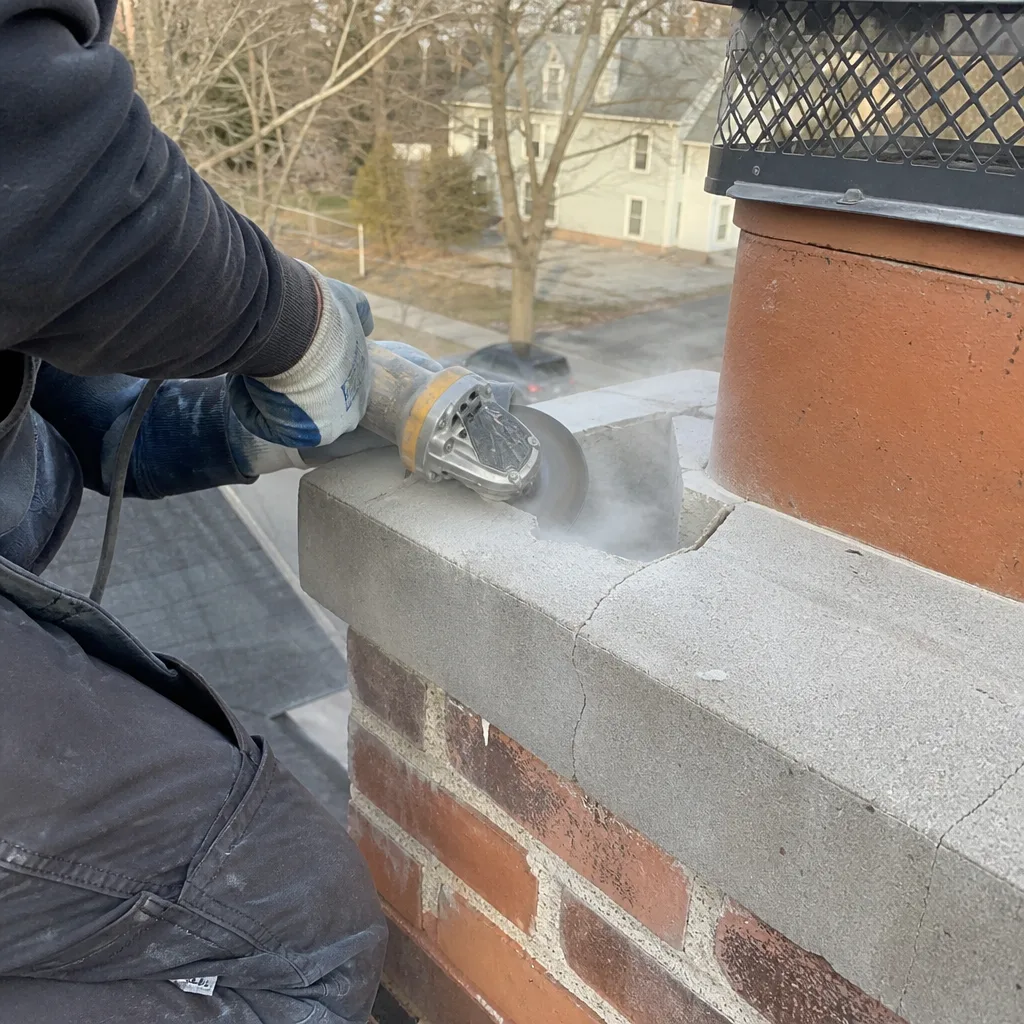
- Joint preparation: cutting and cleaning. We cut failed mortar to a minimum depth of three-quarters of an inch, typically an inch or more on joints that are visibly open. Cutting to depth is what separates a lasting repair from a surface patch. We vacuum and blow out loose material so the new mortar bonds to clean masonry, not dust.
- Mortar matching and application. New York masonry from different eras uses mortars of different hardness. Applying a modern high-strength Portland mix to a pre-war softer brick is a documented cause of spalling because the mortar becomes harder than the brick and the freeze-thaw forces move into the brick face instead of the joint, where they’re supposed to go. We match mortar hardness to brick type – softer lime-based mixes for older brick, harder mixes for modern construction. Materials are sourced through our supply network, which includes Olympia Chimney products where the application fits, keeping material costs from inflating the overall job price.
- Joint finishing and tooling. Fresh mortar is tooled to match the existing joint profile – typically a concave or weathered joint on New York brick work – which sheds water rather than collecting it. Joint profile is functional, not cosmetic.
- Post-job photo documentation and delivery. When the work is done, we photograph the finished joints across the same elevations we shot at the start. Before and after documentation goes into your job record. You have a written scope, a written warranty, and a photo archive. That is what you walk away with on every Level Two job.
Mortar Repointing Pricing in New York
Mortar repointing in New York runs higher than national averages because of chimney height on rowhouses and brownstones, the cost of scaffolding or ladder work in dense urban blocks, and the premium on mortar matching for older pre-war brick. Here is what we typically see in this market:
| Scope | Typical Range (New York) |
|---|---|
| Upper-stack repointing only (top 3-5 courses, single chimney) | $400 – $700 |
| Full stack repointing, single-story or low-access chimney | $700 – $1,100 |
| Full stack repointing, 3-4 story brownstone or rowhouse | $1,100 – $1,800 |
| Repointing with minor brick replacement (per brick, added) | $25 – $60 per brick |
| Scaffolding or lift equipment (if required for height or access) | $200 – $500 added |
What moves a job toward the higher end: chimney height above three stories, difficult street access on narrow blocks common in Chelsea and the West Village, the need for mortar color matching on historic brick, and deterioration that extends below the roofline into the smoke chamber. What keeps jobs toward the lower end: catching mortar failure early, before brick faces are compromised, and chimneys where the upper stack is fully accessible from the roof without additional equipment.
The inspection and camera scan that produces your written estimate is documented under our standard process. The price you receive is the price you pay. If you have a written estimate from another company, bring it – we offer a free second opinion on any written estimate, no strings attached.
Call (551) 213-5548 for a written estimate. No ranges on the phone, no “we’ll know more when we get there” – you get a written number before work starts, every time.
Why New York Chimneys Need Repointing More Often
This is worth being specific about, because the climate argument is not just a sales point – it’s why we see more repointing work per chimney age here than in markets with milder winters.
New York averages roughly 25 to 35 freeze-thaw cycles per year in normal winters, but the number of daily crossings near the 32-degree mark in November, March, and early April is higher than that suggests. A chimney in Inwood or Woodside can cycle above and below freezing four or five times in a single week during shoulder-season weather. Each cycle moves a small amount of water in and out of a micro-crack. Portland-cement mortar handles this reasonably well for the first decade. After that, the cumulative fatigue shows up as recession and crumbling.
The masonry stock in New York compounds this. A significant portion of chimneys in the outer boroughs and upper Manhattan were built between 1890 and 1940 using softer, lime-rich mortars that were appropriate for the brick of that era. When a previous owner or contractor repointed with a hard modern mix – which happens regularly in the resale market – the mismatch accelerates spalling because the joint becomes the stiffest point in the assembly. We see this pattern regularly in Astoria, Flushing, and Bedford-Stuyvesant: partial repointing with the wrong mix causing brick face damage that would not have occurred with a correct mortar match.
It’s one of the reasons the camera inspection matters before any repointing quote. The joint condition visible from the ground does not always predict what’s behind it, and the mortar type visible in existing joints tells you what the replacement needs to match.
Mortar Repointing and Your Chimney’s Larger Condition
Repointing does not fix a failed crown, a damaged liner, or a missing cap – each of those is a separate our Chimney Repair services with its own function. But mortar repointing is often the repair that prevents those downstream problems. Water that enters through failed joints reaches the smoke chamber, then the liner, then the firebox. At Level Two, we flag related conditions during the same inspection visit rather than scheduling separate return trips to identify them.
If the inspection finds conditions beyond repointing – crown repair, cap replacement, liner work – we document them separately in the written scope with their own line-item pricing. You can choose to address them together or separately. We do not bundle repairs without your knowledge, and we do not use the mortar inspection as a lead-in to sell work you don’t need. The camera footage is yours; you can take it to another contractor for a second opinion if you want one.
For the full picture of what chimney repair in New York involves, the home page outlines every service we cover, including liner work, crown repair, cap installation, and full rebuilds.
Key Takeaways
- Mortar repointing in New York costs $400 to $1,800 depending on chimney height, access, and scope – written price before any work starts, no exceptions.
- New York freeze-thaw cycles accelerate mortar failure; most chimneys built before 1960 need repointing every 20 to 25 years under normal exposure.
- Mortar hardness must match brick type – using a modern mix on pre-war soft brick causes spalling, not prevents it.
- A camera inspection before repointing identifies conditions that are not visible from ground level and prevents misquoting the scope.
- Every job is backed by the 365-Day Done Right Promise and delivered with a written scope, written warranty, and photo documentation.
- A free second opinion is available on any written estimate from a competitor – bring it in, we’ll review it.
FAQs – Mortar Repointing
How much does mortar repointing cost in New York?
Mortar repointing in New York typically runs $400 to $1,800 for a standard residential chimney, with upper-stack-only jobs at the lower end and full-height brownstone stacks with equipment costs at the higher end. See How Much Does Chimney Repair Cost? (2026 Price Guide) - New York, NY for detailed pricing. Brick replacement, if needed alongside mortar work, adds $25 to $60 per brick. You get a written price with line items before work begins – not a range, a number. Call (551) 213-5548 and we’ll schedule the inspection and camera scan that produces that written estimate.
What is the difference between repointing and tuckpointing?
Repointing and tuckpointing are often used interchangeably in the trade, but they’re technically different. Repointing means cutting out failed mortar and replacing it with new mortar that matches the existing joint color and hardness. Tuckpointing – in the strict sense – is a decorative finish technique where two contrasting mortar colors are used to create the illusion of fine joints, common on historic masonry. For structural chimney repair in New York, repointing is almost always what’s needed. We’ll tell you exactly which applies to your chimney after the inspection.
Can I wait until spring to have mortar repointing done?
Timing matters here. Mortar installation requires temperatures consistently above 40 degrees Fahrenheit to cure correctly, so mid-winter work in New York is limited to mild spells with overnight protection. But waiting when joints are already open means another full winter of freeze-thaw damage expanding those voids. If the inspection shows significant joint recession, the practical answer is: schedule it as early in the spring season as temperatures permit, and don’t let another winter pass. We’ll give you an honest assessment of urgency based on what the camera shows – not what produces a larger job.
Will repointing change the look of my chimney?
Done correctly, repointing is close to invisible. We match mortar color to the existing joints and tool the finish to the same profile – typically concave or weathered on New York brick work. The new joints will be slightly lighter when fresh and will weather to match the surrounding mortar within one to two seasons. If your chimney has multi-color or specialty brick from a specific era, we discuss color matching before the job starts and document the target in the written scope. The photo record we take at completion gives you a before-and-after reference for exactly how the finish compares.
Get a Written Estimate for Mortar Repointing in New York
If you’re seeing joint recession, white staining, or water inside the firebox, the mortar is worth looking at before the next freeze-thaw season does more work on it. Level Two Chimney New York has inspected and documented more than 38,000 chimneys since 2009 – every one with a camera scan, a written price, and a photo record when the work was done. Corrine Halstead and the Level Two team cover New York and surrounding areas, with a live person answering calls around the clock.
Call (551) 213-5548 to schedule your inspection and written estimate. No voicemail, no web form – a person picks up. You’ll have a written price in hand before anyone touches your chimney.
Written by Corrine Halstead, Owner at Level Two Chimney New York, serving New York.