
Last updated September 19, 2026
Level 1 sweep and inspection to the NFPA 211 annual standard - flue, crown, cap, and flashing checked and photographed
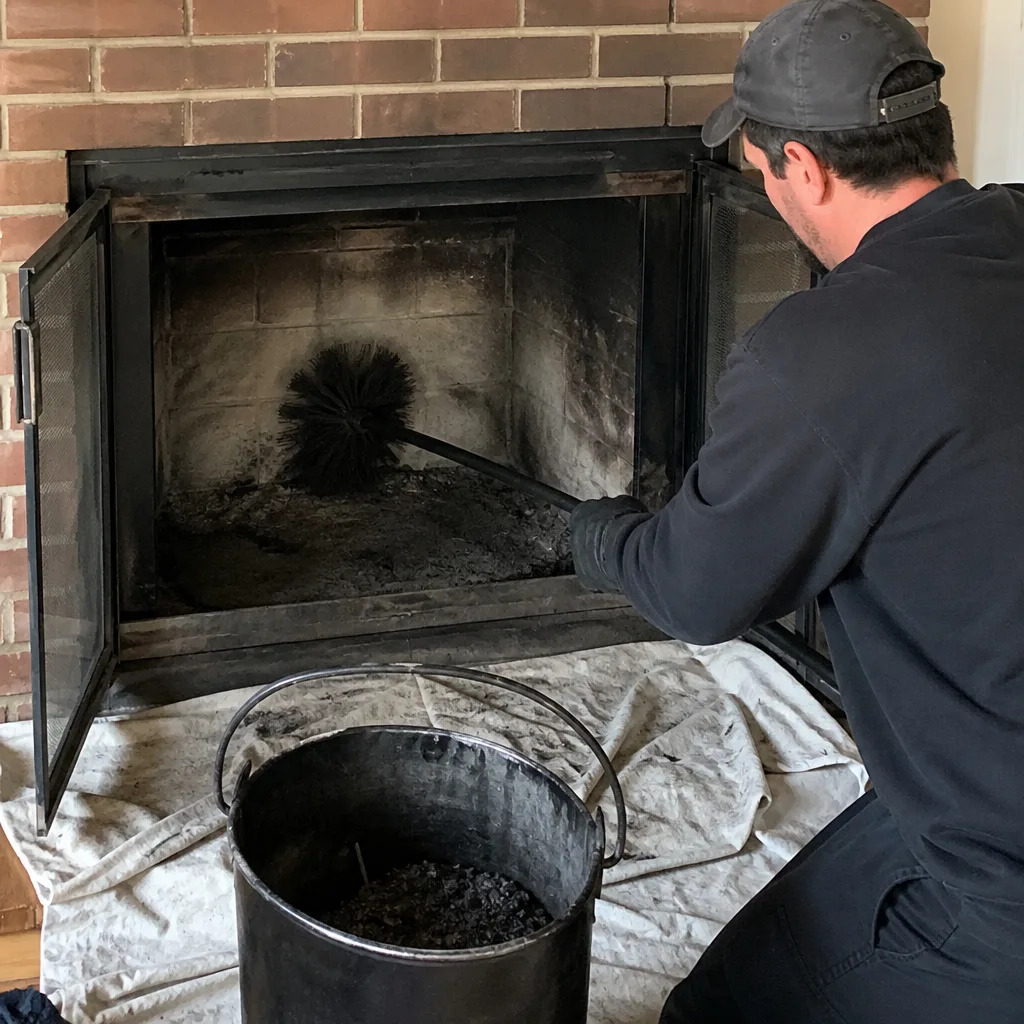
Chimney sweep logs do not sweep chimneys. They loosen some creosote - which then falls where a brush and vacuum still have to collect it.
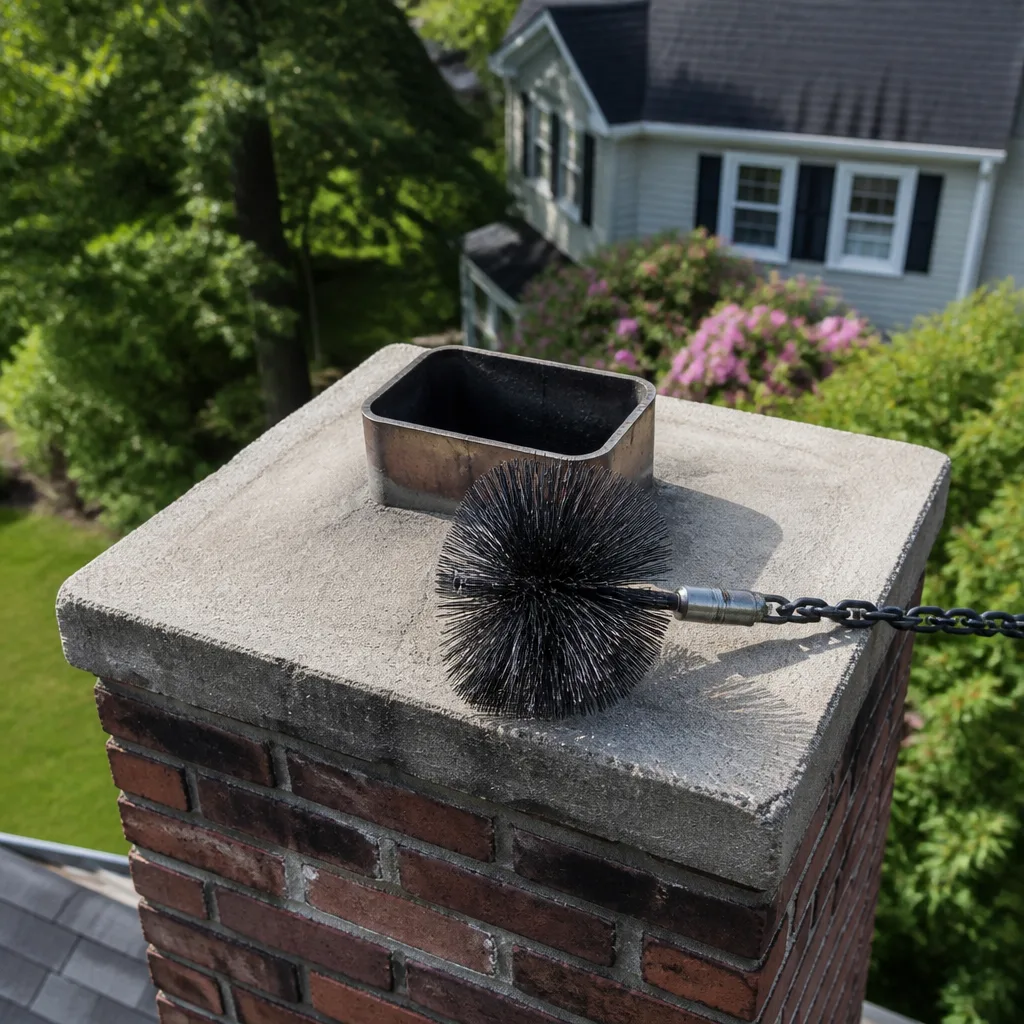
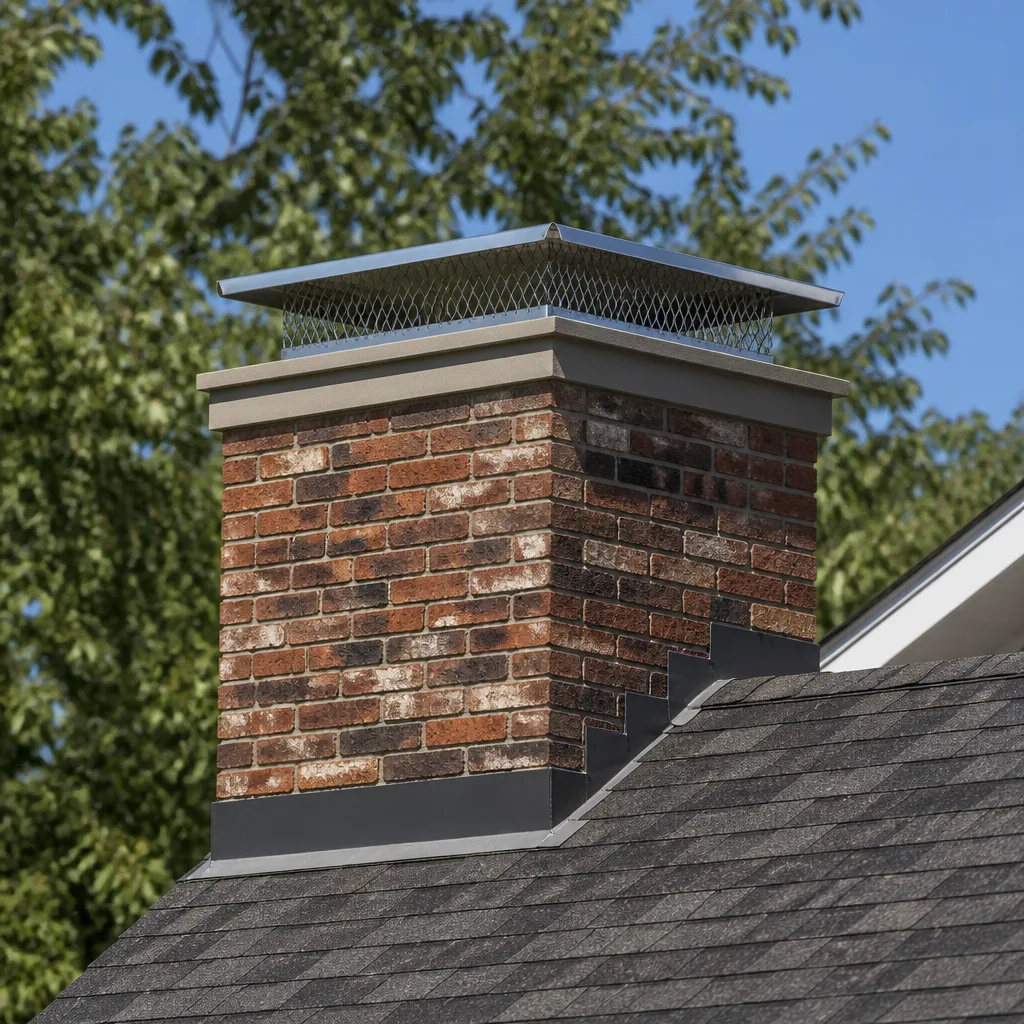
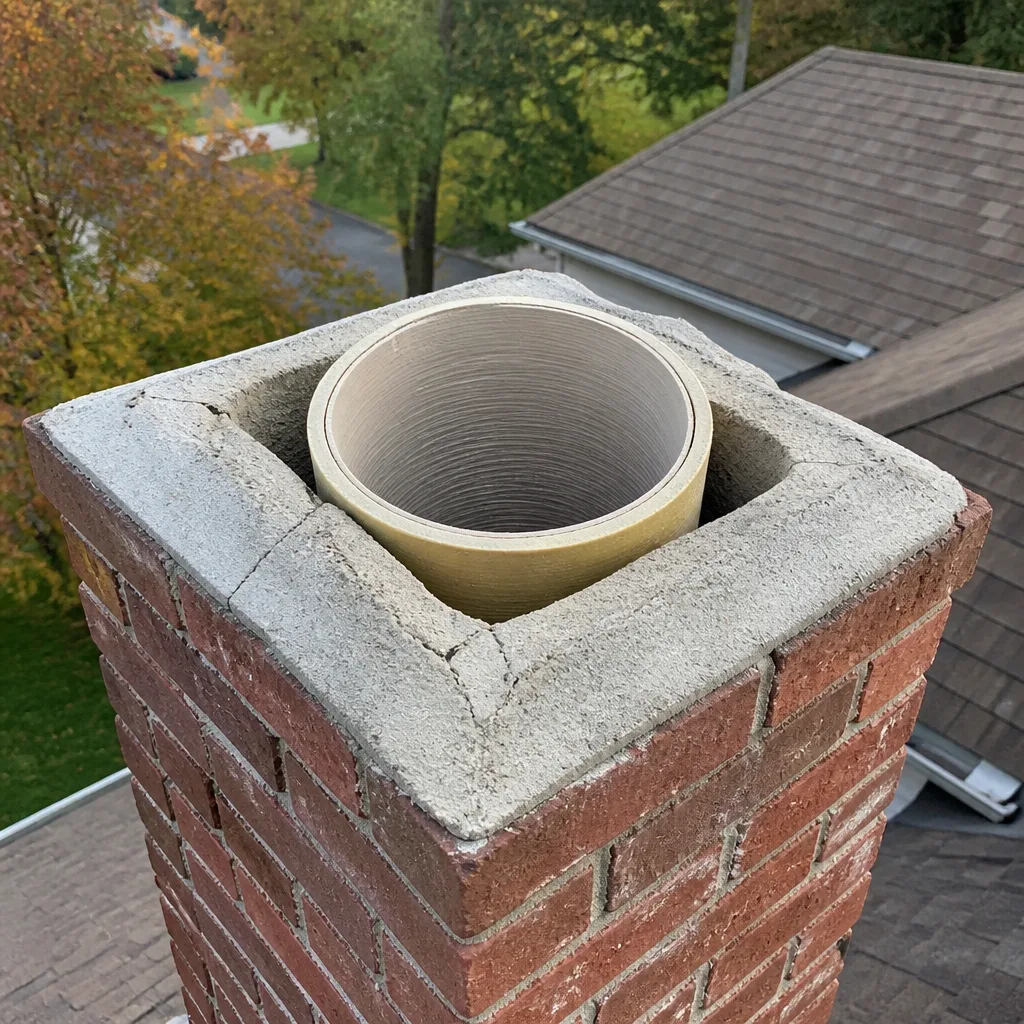
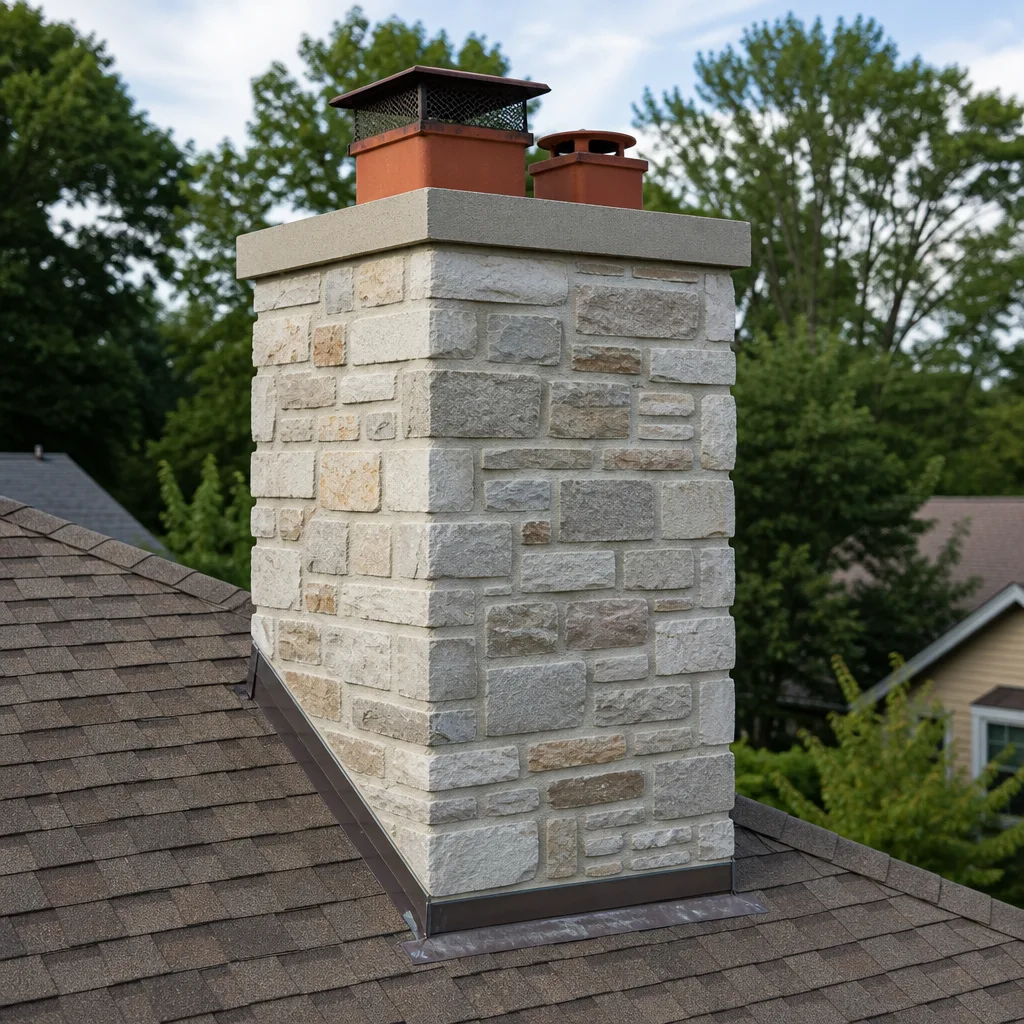
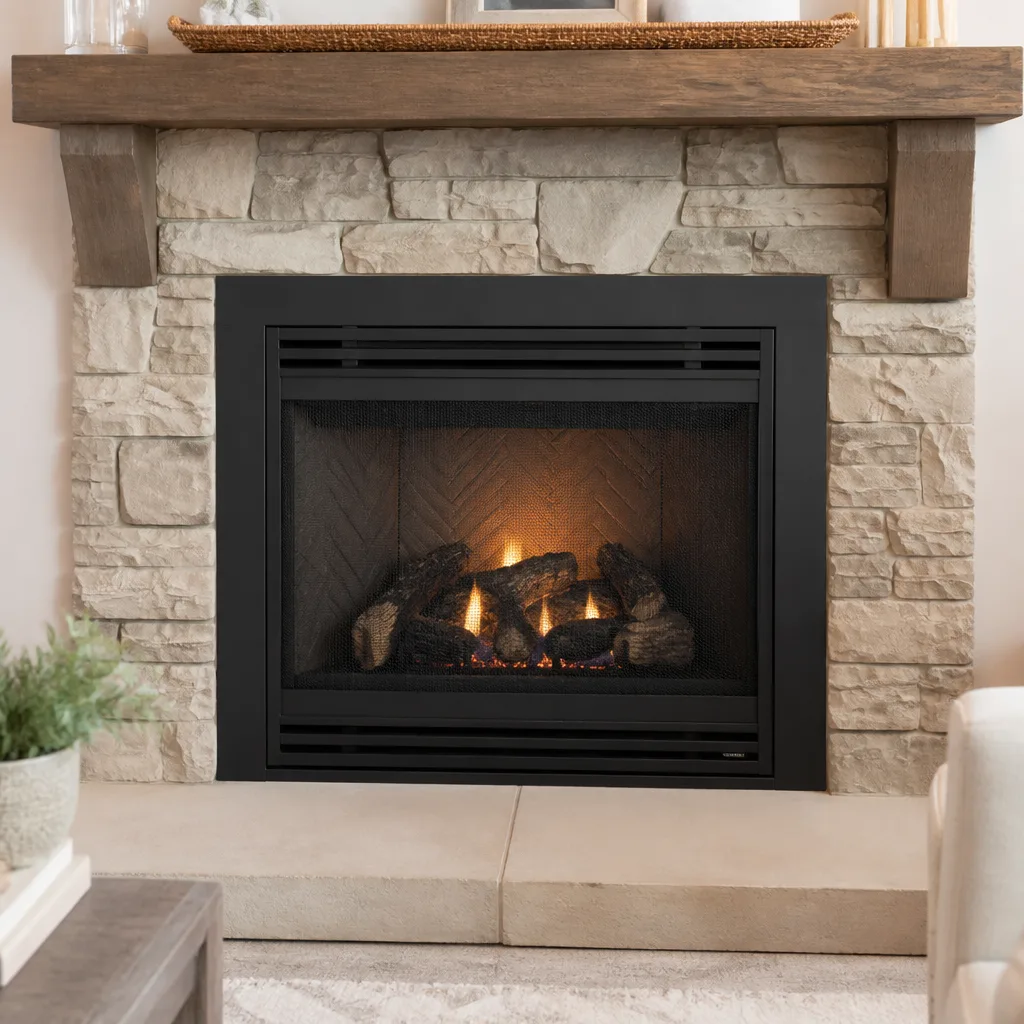
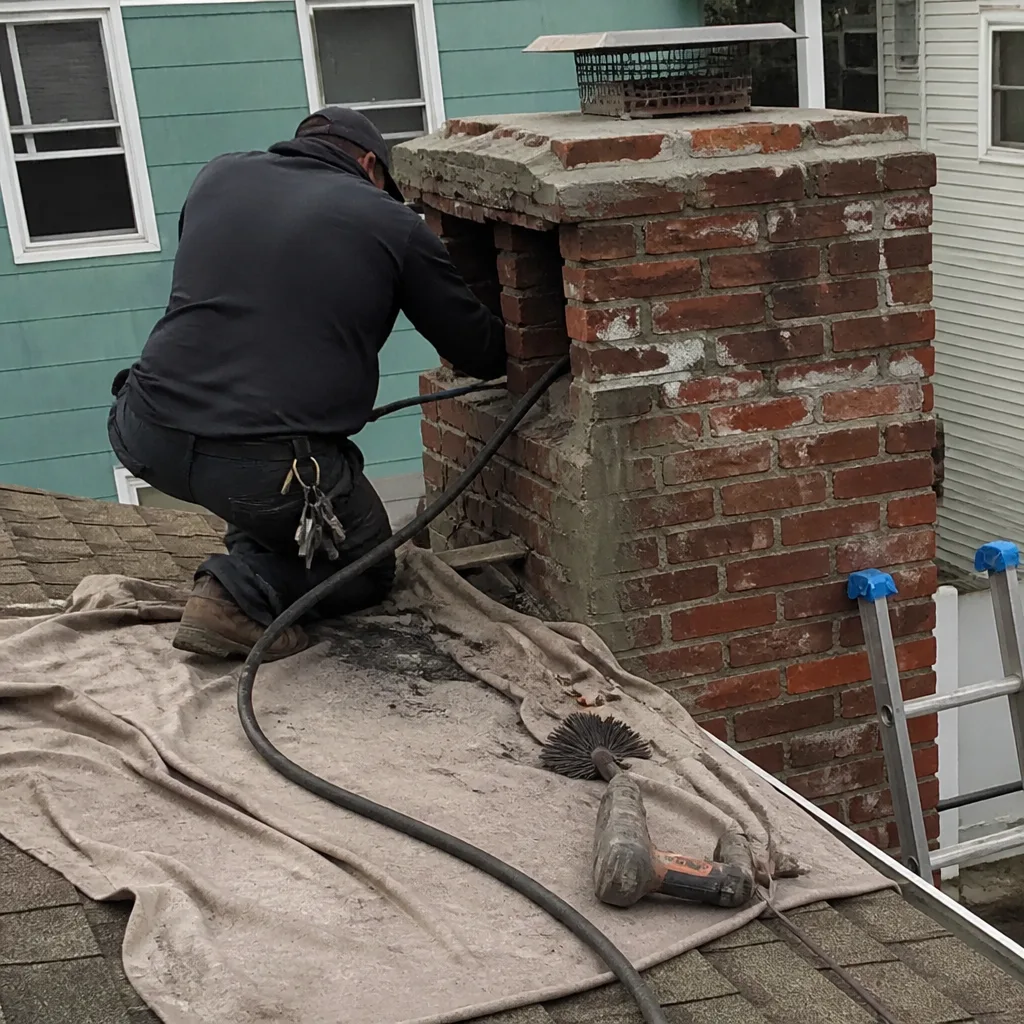 Before
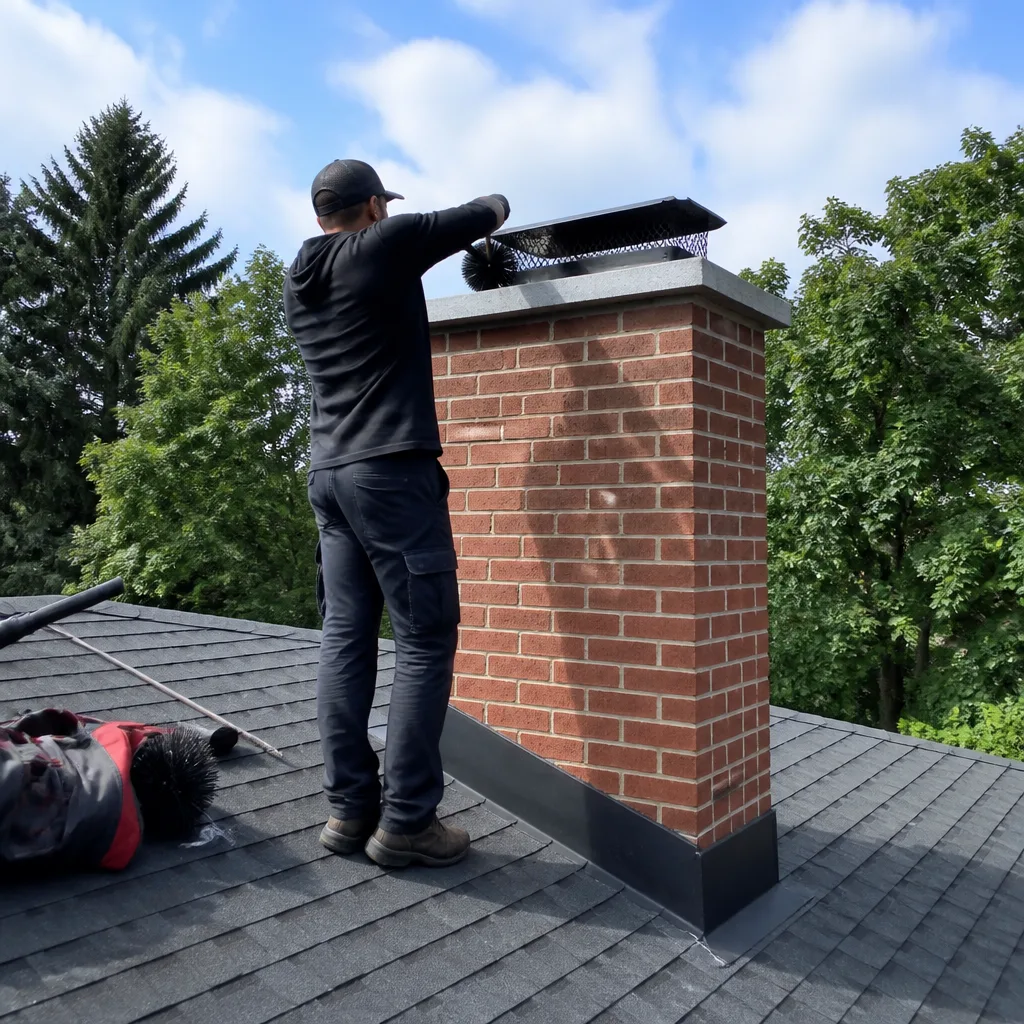 After
After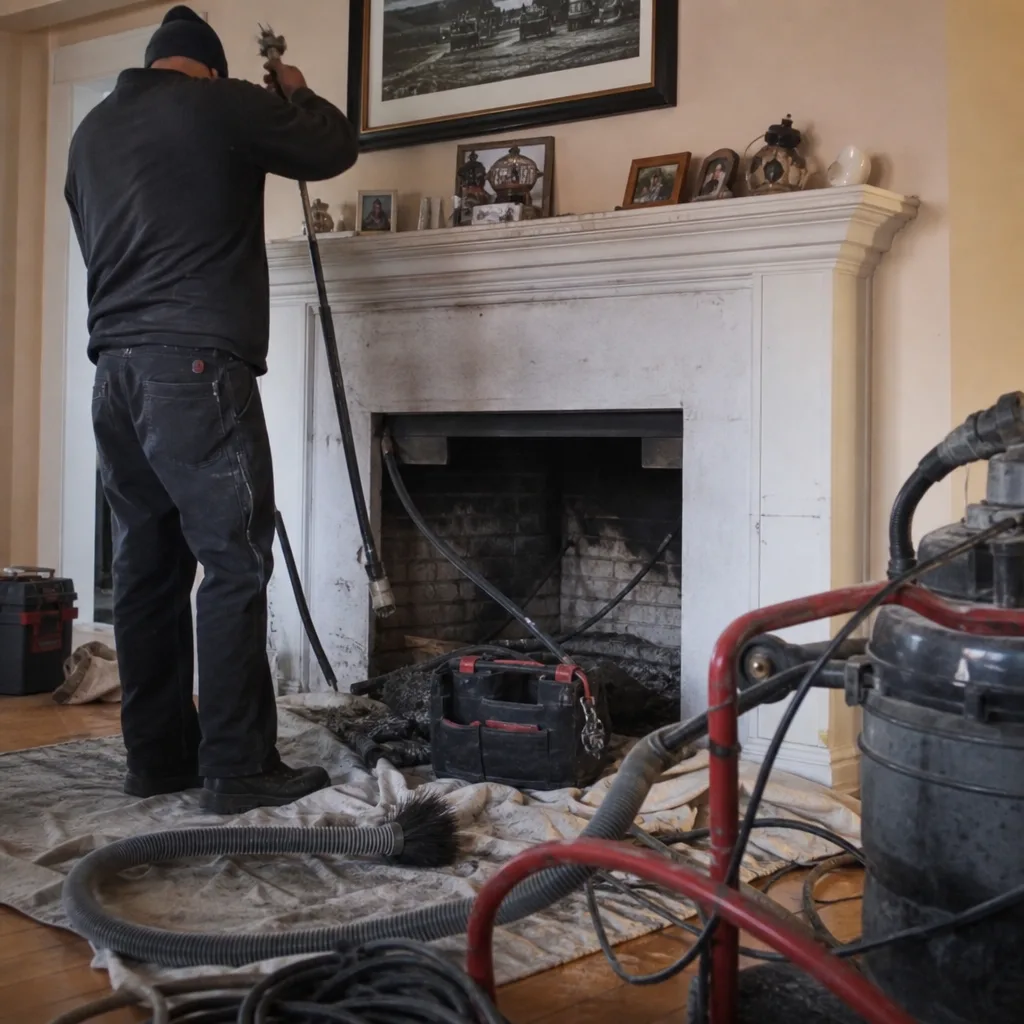 Before
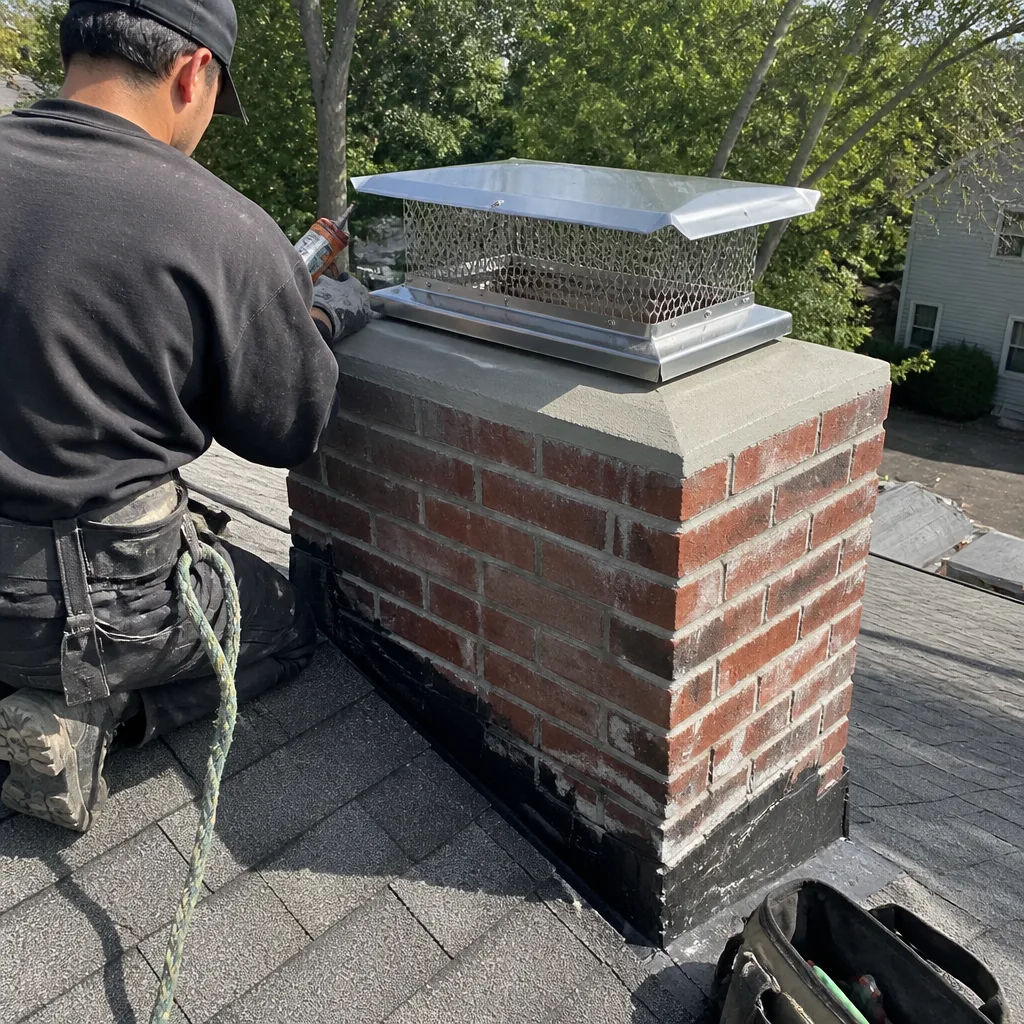 After
After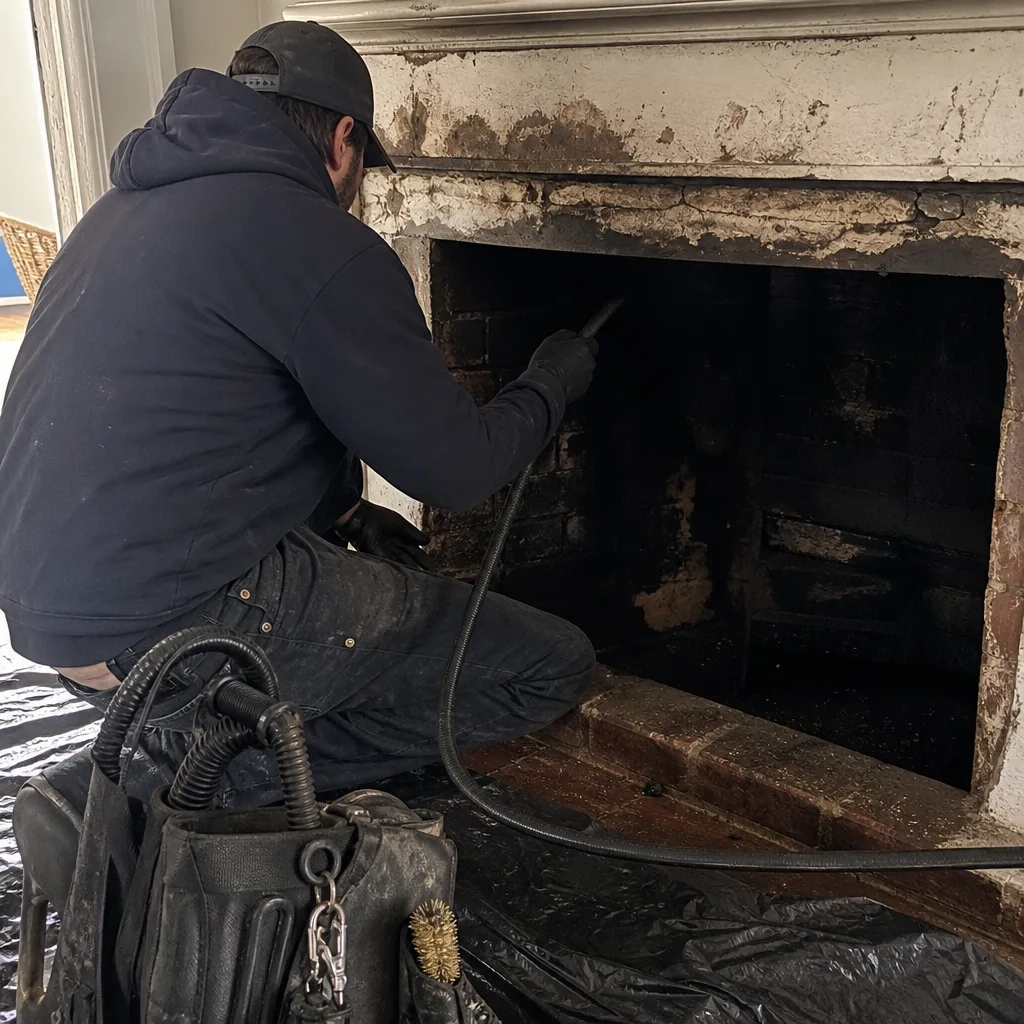 Before
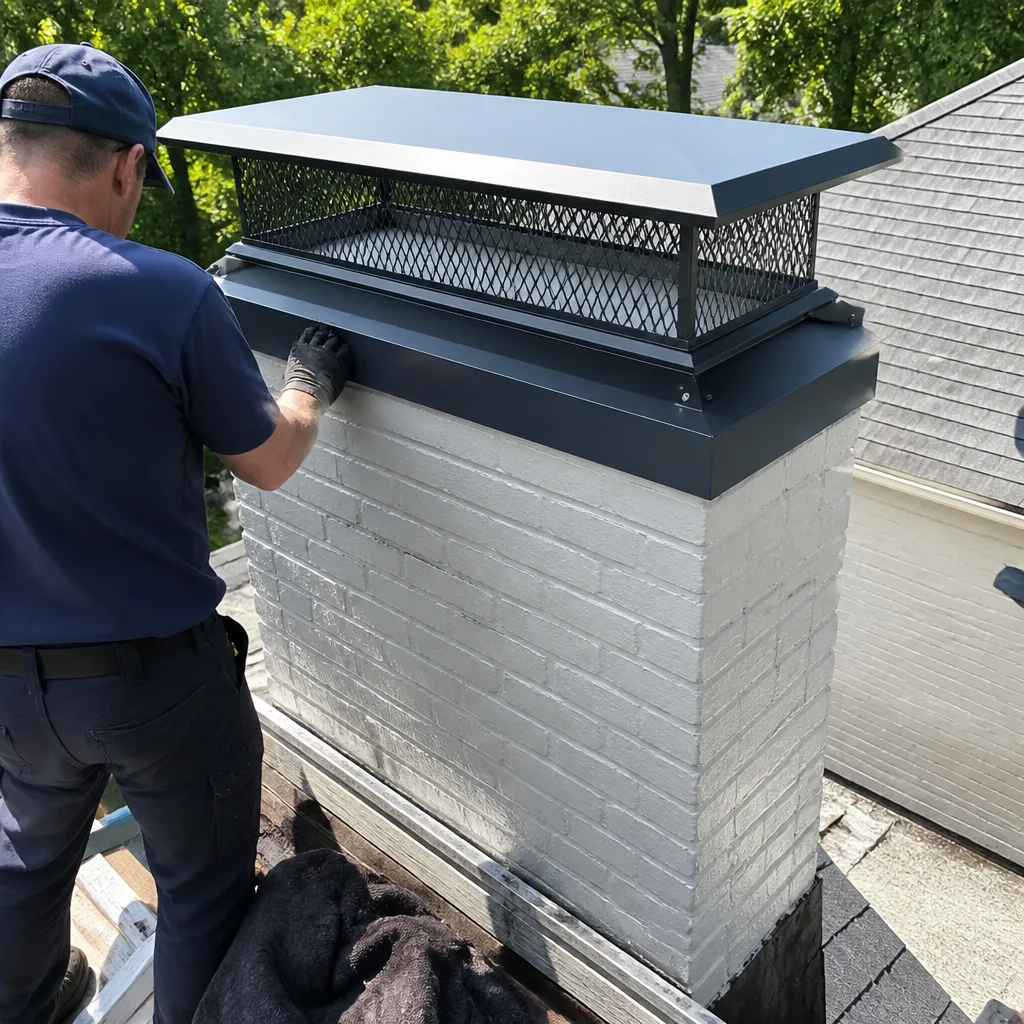 After
AfterChimney Cleaning Cost Breakdown: The New York Homeowner’s Reference for 2026
The $99 chimney cleaning advertised across New York search results and social feeds is a number designed to get a technician through your door, not a number that reflects what the job actually costs. When the camera comes back up and the written report lands in your inbox, the real conversation begins. Add-on billing for liners, caps, crowns, and “emergency repairs” runs $280 to $600 on average in the New York metro market, according to patterns documented in consumer complaint filings with the New York Attorney General’s office. This guide builds a line-item cost model so you can compare quotes on scope, not sticker price, and know exactly what a full-scope cleaning in New York should cost in 2026. For Chimney Cleaning Warning Signs: A New York Homeowner’s Reference Guide, see our companion article.
Quick Answer
A full-scope chimney cleaning in New York City in 2026 costs between $229 and $449 for a standard single-flue fireplace, with most homeowners paying around $310 when the job includes a base sweep, a camera-scan inspection, a written report, cap inspection, and a smoke test. The fourfold price spread you’ll see in quotes, from $99 to over $500, reflects what’s included versus what gets billed as an add-on after the technician is inside the flue. A cleaning that omits camera documentation and a written warranty is not a cheaper version of the same service; it’s a smaller service wearing the same name.
Table of Contents
- The Line-Item Cost Model for a Full-Scope New York Chimney Cleaning
- How Geography Inside New York Drives Real Cost Differences
- How to Evaluate a Low-Price Quote: Request an Itemized Scope
- Deferred Cleaning vs. Liner Repair: A Dollar-for-Dollar Comparison
- What a Written Warranty Is Worth, and How to Read the Exclusions
- Why the Camera Scan Is the Line Between a Sweep and an Inspection
- Creosote Levels and What They Mean for Your Cleaning Cost
- New York Market Pricing Trends for 2026
BeforeAfterThe Line-Item Cost Model for a Full-Scope New York Chimney Cleaning
A proper chimney cleaning is not one line item. It’s a sequence of discrete tasks, each with its own labor, equipment, and documentation requirement. When you compare quotes in New York, the only way to know what you’re paying for is to see every line item written down before work begins. Here is the line-item model we use at Level Two Chimney New York, with 2026 ranges for the metro market.
| Line Item | What It Includes | 2026 New York Range |
|---|---|---|
| Base sweep (single flue) | Mechanical brushing of the full flue length, removal of soot and creosote debris from the smoke chamber and firebox | $120 – $190 |
| Camera-scan inspection (NFPA 211 Level 2) | Closed-circuit camera run the full flue length, still images captured at intervals, verbal readout of liner condition | $89 – $150 |
| Written report | Documented findings with photo record, creosote classification, and any recommended follow-up with plain-language explanation | Included with camera scan at most full-scope firms |
| Cap inspection | Visual and hands-on check of the chimney cap, spark arrestor mesh, and crown surface from the roof or via drone where access is restricted | $40 – $75 when billed separately |
| Smoke test | Controlled smoke introduced at the firebox to verify draft and identify leaks at the flue, thimble, or masonry joints | $50 – $85 |
| Full-scope bundled price | All of the above, written before work starts, with photo documentation and warranty | $229 – $449 |
The gap between the $99 advertised price and the $449 top of the full-scope range is not markup. It’s the difference between a brush run up a flue with no camera, no report, and no warranty, versus a documented inspection that produces a written record you can use to make decisions. Clause 4 of the Haven Standard requires a photo record on every job we perform in New York, and that record is what turns a cleaning from an unverifiable transaction into a documented condition report.
One more line item that should always be $0: the written price. If a New York chimney company will not put a price in writing before the technician arrives, the price does not exist. A written price, written scope, and written warranty delivered before anyone starts is Clause 1 of the Haven Standard, and it’s the single most reliable signal that a quote is honest.
How Geography Inside New York Drives Real Cost Differences
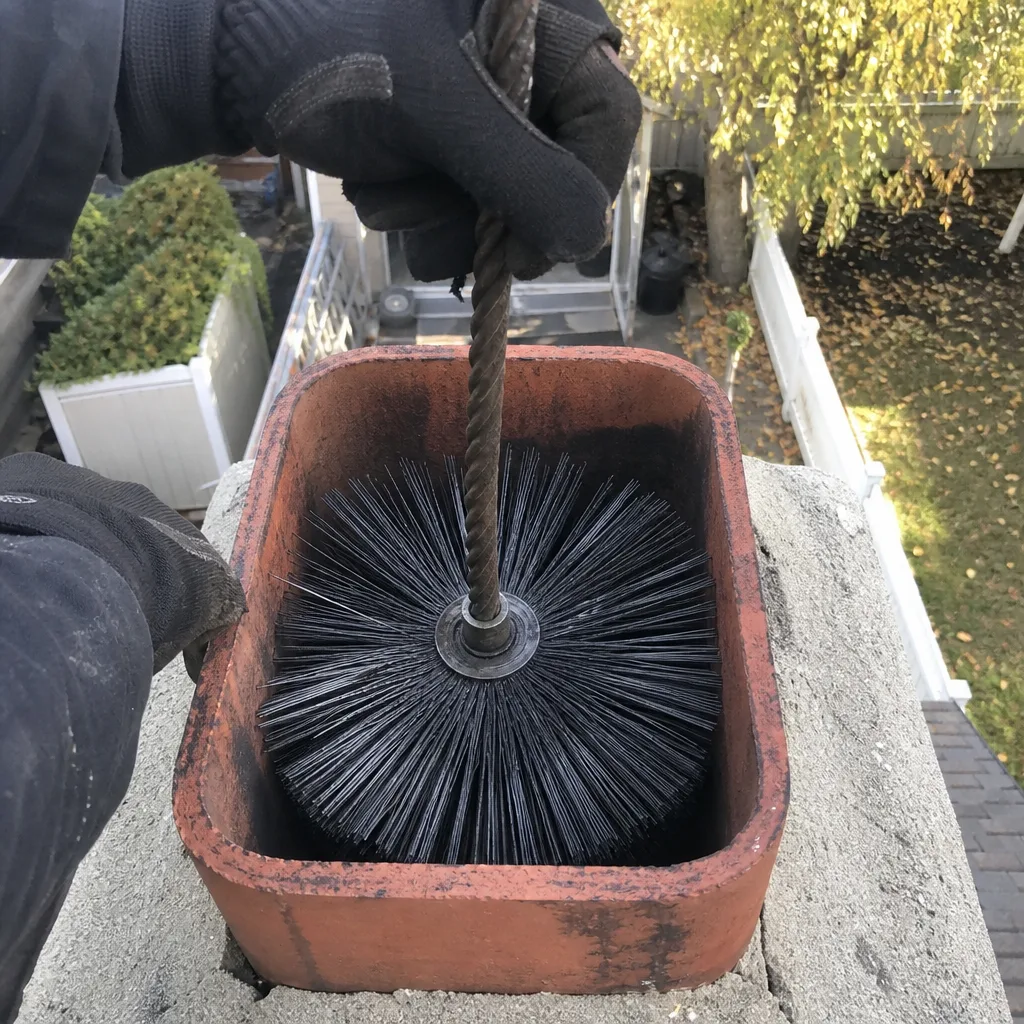
Chimney cleaning prices vary across New York not because different companies have different margins, but because different buildings impose different labor realities. A 40-foot flue in a Park Slope rowhouse is not the same job as a 25-foot flue in a Riverdale detached home, even when both are called “standard cleanings.”
Manhattan and the co-op access problem. Cleaning a chimney in a Manhattan co-op or condo means coordinating with building management, often scheduling around service elevator windows, and sometimes working from a roof that requires roof access permission and a safety briefing. The flue itself may be a standard height, but the access logistics add 30 to 60 minutes of non-cleaning labor. That labor appears in your quote as a higher base price, not as a separate “access fee” (if a company does bill it separately, that’s not unreasonable, but it should be disclosed before the tech arrives).
Brooklyn rowhouses and flue configuration. A brownstone or rowhouse chimney in neighborhoods like Park Slope, Cobble Hill, or Bed-Stuy often serves multiple fireplaces on multiple floors, sometimes through a shared flue with separate thimbles at each level. Cleaning one flue may require working from the roof and from inside, and if the other fireplaces share the same flue, the job scope changes. Expect a Brooklyn rowhouse cleaning to run at the higher end of the New York range, $310 to $430, simply because configuration complexity is higher.
Bronx and Queens detached homes. A single-family detached home in Riverdale, Bayside, or Forest Hills with one fireplace and one flue is the most straightforward job in the New York market. Access is direct, the roof is walkable or ladderable, and the flue is usually between 20 and 35 feet. These jobs are where the $229 to $310 full-scope price is most common, and where a low-ball quote should raise the most suspicion because the work is genuinely simpler.
Roof pitch and chimney height. New York’s older housing stock includes steep-pitch roofs in neighborhoods like Washington Heights and Flatbush, where roof access requires a taller ladder or a roof harness. A chimney cleaning on a steep roof is not a place to cut corners; a fall from a three-story roofline is a life-changing injury, and any company working that access should carry the insurance and training to match. This is one line item where paying more in New York is paying for the crew’s safety equipment and training, and it’s money well spent.
How to Evaluate a Low-Price Quote: Request an Itemized Scope
A low price is not the problem. A low price with no itemized scope attached is the problem. The full-scope model above is your comparison tool: when a New York chimney company quotes you $99 or $129, ask them to itemize what that price includes using the same five line items. Here’s the step-by-step evaluation process.
- Ask for the written itemized scope before booking. Every legitimate quote in New York can be produced in writing before anyone steps into your home. If the company will only discuss price over the phone or “after we take a look,” treat that as a refusal to quote, not a courtesy.
- Check whether the camera scan is included or billed separately. The camera scan is the single largest add-on in the New York chimney market, typically $89 to $150. A $99 sweep that doesn’t include a camera scan is really a $188 to $249 sweep once the add-on is applied after the technician is inside.
- Ask what the written report contains. “We’ll tell you what we find” is not a report. A report is a written document with findings, photos, creosote classification, and recommendations. Ask to see a sample report. If they can’t produce one, the report doesn’t exist.
- Ask what the warranty covers, in writing. If the warranty is “we’ll come back if you have any problems,” ask what that means in writing. Which problems, for how long, and under what conditions? A verbal warranty is not a warranty; it’s a conversation.
- Compare on line items, not sticker price. A $229 full-scope quote with camera scan, report, and written warranty is cheaper than a $99 sweep plus a $120 camera add-on plus a $60 “smoke test” plus a $40 “cap inspection” that all get billed after the tech arrives. The $99 price was never the price; the $319 final bill was.
What does a contractor’s refusal or inability to provide an itemized scope tell you? It tells you the price is being managed, not the job. It tells you the add-ons are the business model, and the cleaning is the loss leader. It tells you everything you need to know about how the visit will go once the technician is in your flue with a camera and a recommendation for $2,800 of liner work you can’t see and can’t verify. A company that won’t write down the scope before work starts is a company that doesn’t want you to be able to compare it.
Deferred Cleaning vs. Liner Repair: A Dollar-for-Dollar Comparison
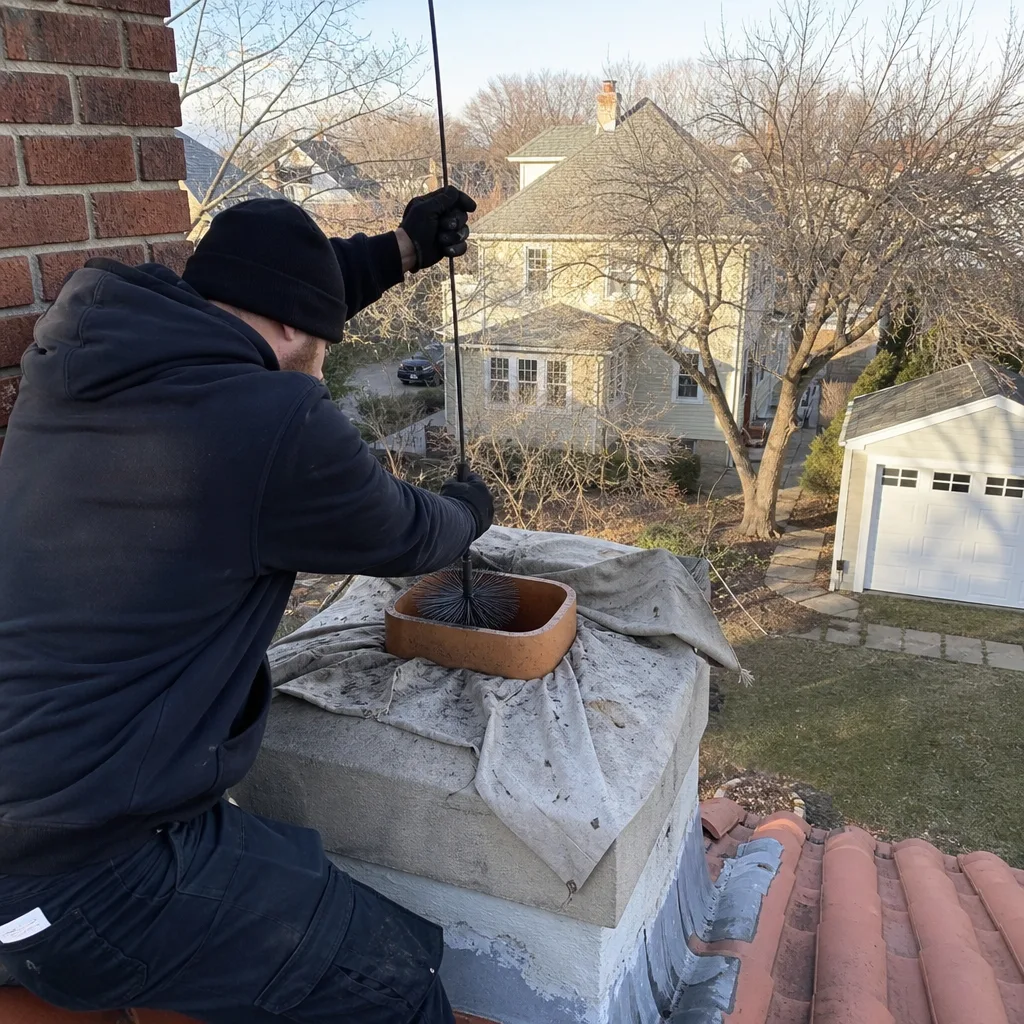
Homeowners in New York sometimes defer a chimney cleaning for a year or two because the fireplace is used lightly and the $300 feels optional. The math on that deferral is worth doing in real dollars.
The cost of deferred cleaning. A standard full-scope cleaning in New York runs $229 to $449. Deferring it for two years saves between $229 and $898, depending on where you live and which company you use. That’s the entire upside.
The cost of what deferred cleaning can lead to. Class III creosote, the glazed, tar-like residue that forms when a chimney goes too long between cleanings, requires chemical treatment and specialized removal that runs $150 to $300 above a standard sweep. A chimney fire, which Class III creosote makes significantly more likely, typically costs $5,000 to $15,000 in flue liner replacement and masonry repair in the New York market. If the chimney fire spreads to the home, the insurance deductible alone is usually $1,000 to $5,000, before rate increases.
Here’s the comparison in table form, using New York market repair rates:
| Scenario | Cost Range (New York, 2026) | Notes |
|---|---|---|
| Annual full-scope cleaning, done every year | $229 – $449 per year | Documented, warranted, predictable |
| Class III creosote removal (after 2+ years skipped) | $450 – $700 | Chemical treatment plus mechanical removal |
| Liner replacement after chimney fire or crack discovery | $3,500 – $8,500 | Includes stainless liner, insulation, and labor |
| Masonry repair after water entry (crown cracks, spalling) | $1,200 – $4,000 | Varies with chimney height and access |
| Insurance deductible after a chimney-related house fire | $1,000 – $5,000 | Before rate increase, before displacement |
The deferred cleaning “saves” $300 and risks a minimum of $3,500 in liner work and a maximum that includes the house. That is not a risk calculation; it’s an arithmetic problem where the downside is measured in thousands and the upside is measured in hundreds. In our experience cleaning New York chimneys for more than 38,000 documented visits since 2009, the chimneys in the worst shape are rarely the ones in neglected houses. They’re the ones in houses where the previous owner “used the fireplace a few times a year” and skipped the cleaning for five seasons because nothing looked wrong from the outside. Nothing looks wrong from the outside is the exact problem a camera scan exists to solve.
What a Written Warranty Is Worth, and How to Read the Exclusions
A warranty is a promise with exclusions, and the exclusions are where most chimney warranties in New York become functionally worthless. Understanding what a warranty is worth starts with understanding what it actually covers.
A written warranty on a cleaning is worth roughly $80 to $150 in dollar terms. That’s the value of the callback you won’t need to pay for if the sweep was incomplete, the drafting problem reappears within the warranty period, or the documented findings don’t hold up. Companies that don’t offer written warranties are not “cheaper”; they’re offloading the risk of their own workmanship onto you.
Here’s how to read a chimney warranty’s exclusion language:
- Look for the phrase “excluding damage caused by deferred maintenance.” This exclusion is reasonable on its face, but it’s often invoked to deny legitimate claims. If your cleaning was current and documented, this exclusion should never apply. If you don’t have a documented cleaning record, it applies to everything.
- Look for warranty periods under 90 days. A 30-day or 60-day warranty on a chimney cleaning in New York is barely a warranty; it’s a window for you to notice a problem. A 365-day warranty covers a full heating season, which is the minimum period that matters. Our 365-Day Done Right Promise covers a full year because a chimney used seasonally may not reveal a problem until the following fall.
- Look for exclusions on “hidden conditions” or “pre-existing damage.” These exclusions are standard in construction warranties, but they should come with an obligation: the contractor should document the pre-existing condition with photos during the original inspection. If they exclude pre-existing damage but never documented what was pre-existing, the exclusion is unverifiable. That’s the entire reason Clause 4 of the Haven Standard requires a photo record on every job.
- Look for oral warranties. “We’ll take care of you if anything goes wrong” is not a warranty. It’s a sentence. If it’s not written, it doesn’t exist, and no New York court or consumer protection agency can enforce it. H.A.V.E.N. ‘Have it in writing’ is the first letter of the standard for a reason.
- Ask what happens if the warranty is triggered. Does the company come back and fix it at no charge? Do they refund the cleaning price? Do they credit it toward future work? A warranty without a remedy is a statement of intent, not a legal obligation. The remedy should be in the written warranty language.
A written warranty on a chimney cleaning is not a piece of paper; it’s a priced risk transfer. The company that offers it has priced their confidence in their own work. The company that doesn’t has priced their risk of having to come back, and that risk is now yours.
Why the Camera Scan Is the Line Between a Sweep and an Inspection
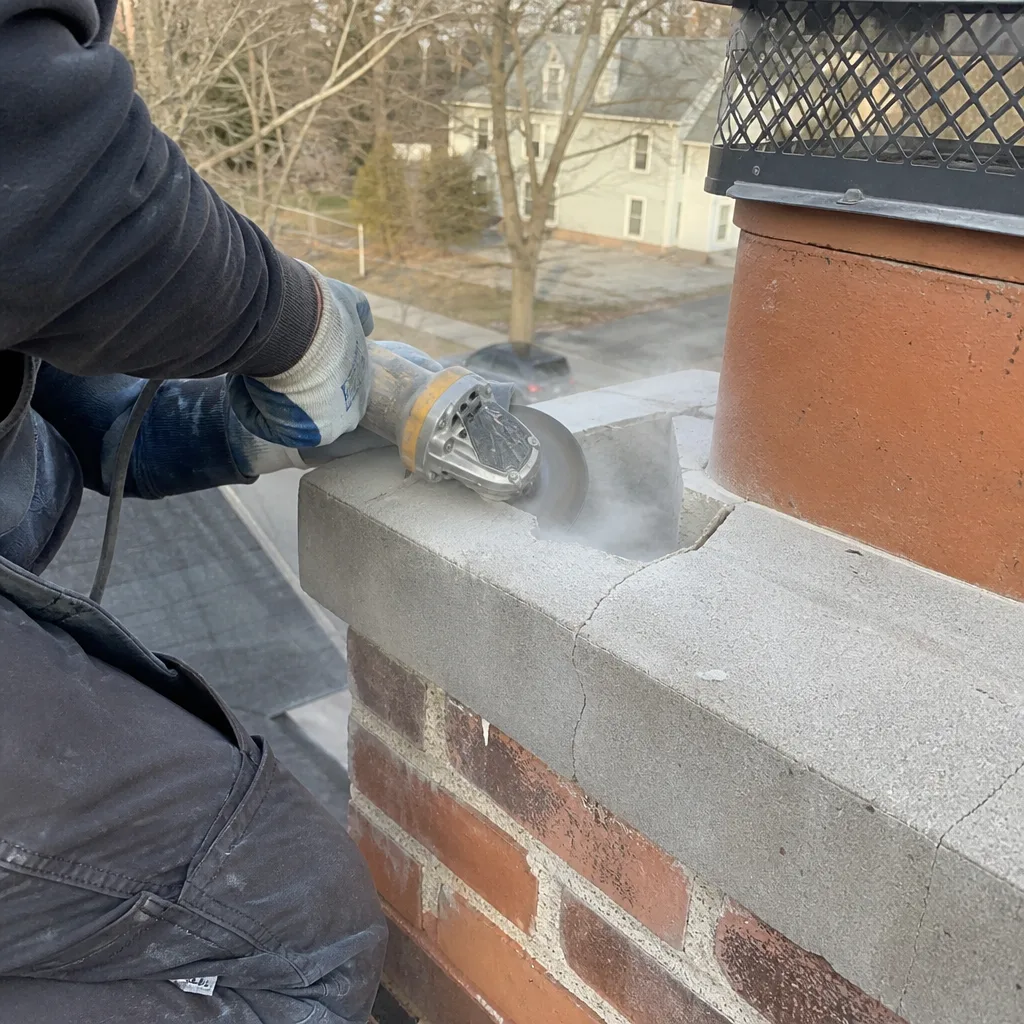
A chimney sweep removes material. A chimney inspection determines whether the system is safe to continue using. These are different services, and in New York, the difference is a camera.
A camera-scan inspection, which qualifies as an NFPA 211 Level 2 inspection when properly executed, runs a closed-circuit camera the full length of the flue and captures still images at intervals. It shows the liner condition, joint integrity, hidden cracks, bird or animal nesting, and creosote accumulation that’s invisible from the firebox. Without it, a technician is working blind above the first few feet of the flue, and any recommendation they make about your liner or masonry is, at best, an educated guess.
Level Two Chimney New York made camera-scan documentation the default in 2009, years before regulators or insurers asked for it, and that practice became Clause 4 of the Haven Standard. It runs continuously on every job we do in New York, and the photo record is delivered with the written report whether you ask for it or not. Materials sourced from DuraFlex and Olympia Chimney are what we install when repairs are indicated; the camera is how we know whether they’re indicated at all.
If you’re comparing chimney cleaning quotes in New York and one company doesn’t include a camera scan in their base price, you’re not comparing a $99 cleaning to a $229 cleaning. You’re comparing a brush run to an inspection. The brush run may be perfectly good at removing soot. It cannot tell you whether your flue liner is cracked, your smoke chamber is spalling, or your chimney cap has deteriorated to the point where water entry is imminent. Those are the conditions that cost thousands to repair, and they are exactly the conditions a camera scan is designed to document.
Creosote Levels and What They Mean for Your Cleaning Cost
Creosote is not one substance; it’s a spectrum of combustion byproducts that range from flaky and removable to glazed and dangerous. The level of creosote in your chimney determines how long the cleaning takes and what it costs in New York.
- Class I creosote: Light soot and flaky residue. Removes with standard mechanical brushing. This is what a well-maintained chimney produces in a season of normal use. Cleaning time: 45 to 75 minutes. Cost impact: none; included in base sweep.
- Class II creosote: Granular, tar-like deposits that resist brushing. Requires more aggressive mechanical removal and may need two passes. Common in chimneys that have gone two or more seasons without cleaning. Cleaning time: 1.5 to 2.5 hours. Cost impact: $50 to $130 above base sweep.
- Class III creosote: Glazed, hardened, tar-like buildup that adheres to the flue wall. Cannot be safely removed by mechanical brushing alone; requires chemical treatment (such as a creosote remover product) left to cure for days, followed by a specialized removal. Common in chimneys with five or more years of deferred cleaning, or in chimneys where the homeowner burned unseasoned wood or ran low-temperature fires consistently. Cleaning time: multiple visits, or one long visit with post-treatment follow-up. Cost impact: $150 to $300 above base sweep.
Class III creosote is the level at which a chimney fire becomes a realistic risk rather than a theoretical one, and it’s the level most commonly documented in New York homes where cleaning was deferred for half a decade. If your technician reports Class III creosote, the additional $150 to $300 is not an upsell; it’s the cost of removing a genuine fire hazard. The camera scan should document the Class III creosote in photos, and the written report should state the classification in plain terms.
New York Market Pricing Trends for 2026
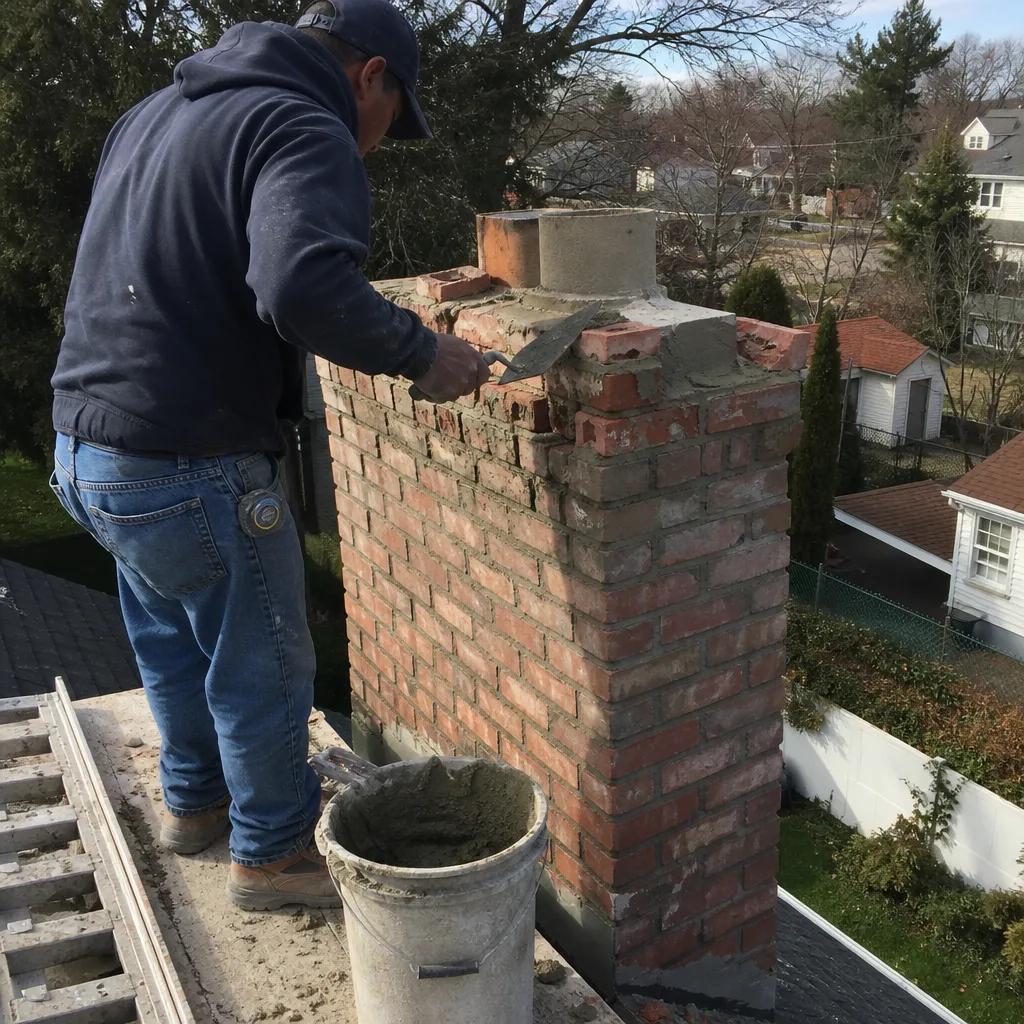
Chimney cleaning prices in New York have moved upward in 2025 and will continue to do so in 2026, driven by three factors: labor costs, insurance premiums, and the slow adoption of camera documentation as a standard rather than an add-on.
Labor. Background-checked, uniformed technicians in New York command wages that have risen roughly 8 to 12 percent since 2023, and that cost passes through to your cleaning. A company paying $18 an hour for chimney techs in the New York metro is not a company you want on your roof, and any quote that implies that labor rate is below the market wage for qualified work.
Insurance. Liability and workers’ compensation premiums for chimney companies in New York have risen sharply, driven by the roof-access risk profile of the work. A company working on steep-pitch rowhouse roofs in Brooklyn or Manhattan without adequate insurance is a financial risk to the homeowner beyond the price of the cleaning.
Camera documentation as standard. The camera scan is slowly becoming a standard inclusion in New York chimney cleaning, not an add-on. This is a consumer-protection shift, and it’s the right direction, but it means the “standard” price of a cleaning is rising from the $99 to $149 range toward the $229 to $449 range as documentation becomes the floor rather than the ceiling. The $99 price didn’t go away because companies got greedier; it went away because homeowners started asking for proof, and proof costs money.
What should a New York homeowner expect to pay in 2026? A full-scope cleaning with camera scan, written report, cap inspection, and smoke test should run between $229 and $449 in the metro area, with Manhattan co-op access logistics and Brooklyn rowhouse configurations at the top of that range and Bronx/Queens detached homes at the bottom. Anything below $199 with no itemized scope should be treated as a quote for a partial service, not a discount.
Common Mistakes to Avoid
- Booking a $99 sweep without reading the itemized scope. The $99 price in New York is a lead generator, not a total cost. If the camera scan, report, and smoke test are billed separately after the fact, your real price is $250 to $350, and the company has already told you how they operate.
- Skipping the camera scan because “the fireplace works fine.” The most expensive chimney problems in New York are the ones you can’t see from the hearth. A cracked flue liner or a deteriorated cap doesn’t announce itself; it accumulates damage until repair is unavoidable. See our Chimney Repair in New York guide for what those repairs cost once they’re needed.
- Accepting a verbal warranty. A New York chimney company that won’t put a warranty in writing is telling you, in advance, that they don’t intend to stand behind their work. Ask for the warranty language before you book.
- Comparing quotes without comparing line items. A $449 full-scope quote looks expensive next to a $99 sticker price, but the $99 quote is for half the work. Compare line item to line item, or don’t compare at all.
- Deferring a cleaning to save $300. The deferred cleaning math in New York is a $300 savings against a $3,500 to $8,500 liner replacement risk. That’s not a financial decision; it’s a lottery ticket with the house as the stake.
- Burning unseasoned wood in a New York fireplace. Unseasoned wood produces more creosote per fire than seasoned wood, and New York’s wet, variable winters mean firewood left uncovered rarely dries properly. Burn dry wood, and the cleaning stays easy.
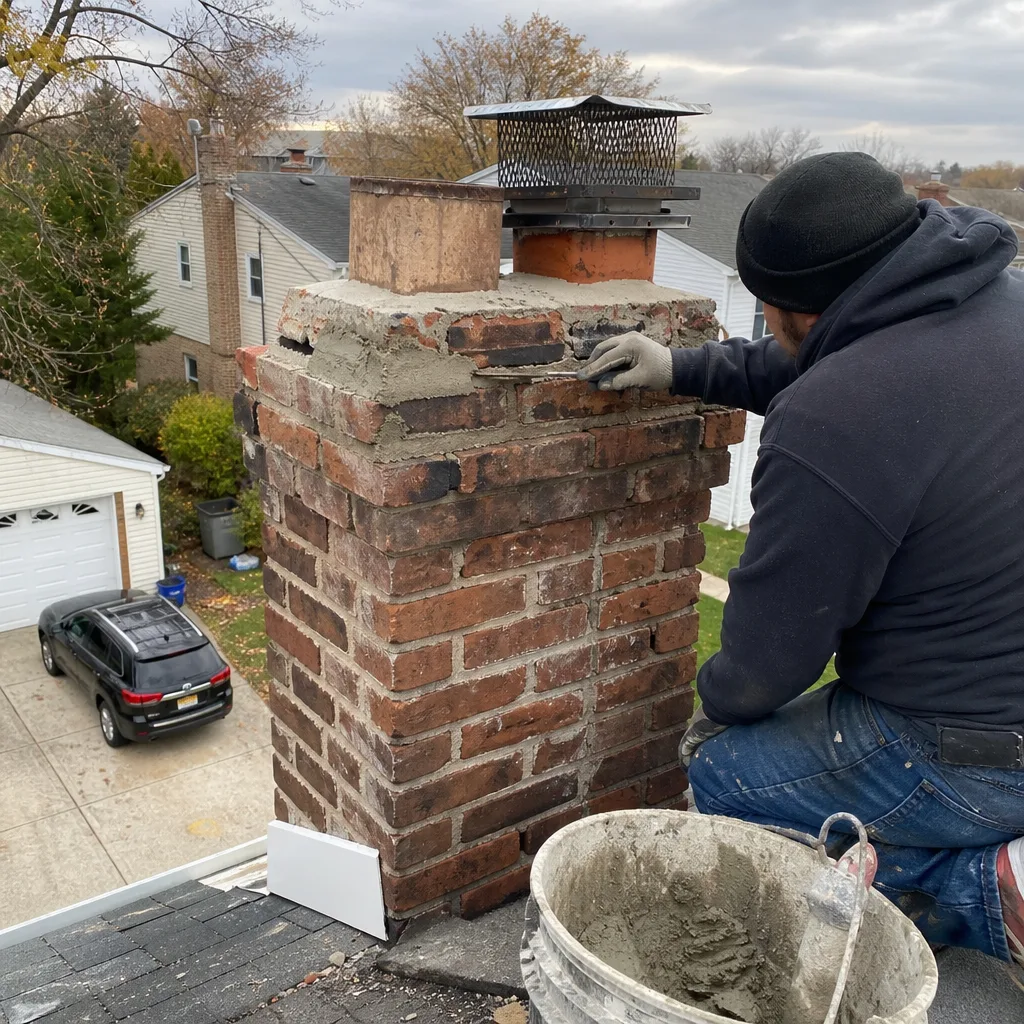
- Ignoring the cap inspection because the cap “looks fine from the ground.” A chimney cap in New York endures freeze-thaw cycles, pigeon nesting, and rain exposure. What looks fine from the sidewalk is often rusted through at the mesh or detached at the crown. The cap inspection is a $40 to $75 line item that can prevent a $1,200 masonry repair. Our Fireplace Services in New York page covers cap and crown work in more detail.
When to Call a Professional
Call a professional chimney company when you haven’t had a documented cleaning in more than 12 months, when you’ve just moved into a home with an unknown chimney history, or when you notice any of the following: a smoky smell in the house after the fire is out, visible creosote buildup on the damper or firebox walls, water staining on the ceiling near the chimney, or a chimney cap that’s visibly rusted or missing. If you hear animals in the flue, call sooner rather than later; a nesting animal is a fire hazard and a carbon monoxide risk. None of these conditions should be handled as a DIY project, and a steep roof or a tall chimney makes professional access a safety necessity, not a convenience. Level Two Chimney New York offers free estimates throughout the New York metro area. Call (551) 213-5548 and we’ll put a written price in your hands before anyone steps onto your roof. You can also find full details on our Chimney Cleaning & Sweep in New York service page.
Frequently Asked Questions
A full-scope chimney cleaning in New York costs $229 to $449 in 2026, with most homeowners paying around $310 for a standard single-flue fireplace. The price includes a base sweep, a camera-scan inspection, a written report, cap inspection, and a smoke test. Quotes below $199 typically exclude the camera scan or the written report, which get billed as add-ons after the technician arrives. Call (551) 213-5548 for a written quote before any work begins.
A $99 chimney cleaning in New York is a partial service, not a complete cleaning. The $99 price typically covers only the mechanical brush run with no camera scan, no written report, no cap inspection, and no warranty. Once those items are added on site, the final bill commonly lands between $280 and $600. The $99 price is not a bargain; it’s a different, smaller service wearing the same name.
Yes, if you want to know whether your chimney is safe to continue using. A camera scan, which meets NFPA 211 Level 2 inspection requirements when properly executed, documents the condition of the flue liner, joint integrity, and hidden cracks or creosote buildup that are invisible from the firebox. Without it, any recommendation about your liner or masonry is an educated guess. The photo record also gives you a verifiable condition baseline for the future.
Annually, if you use your fireplace at all. The National Fire Protection Association recommends cleaning when creosote reaches 1/8 inch of accumulation, which for most New York homes with seasonal use is about one heating season. If you burn fires more than three times a week, or burn unseasoned wood, sweep twice a year. If you never use the fireplace, an annual inspection is still worth doing because water entry and animal nesting don’t care whether you burn fires.
Creosote accumulates. After two seasons, it typically reaches Class II, which means heavier buildup and a $50 to $130 surcharge above the base sweep. After five or more seasons, it often reaches Class III, the glazed, tar-like state that requires chemical treatment and $150 to $300 in additional removal cost. Class III creosote is a chimney fire hazard, and a chimney fire in New York typically leads to $3,500 to $8,500 in liner replacement, plus a $1,000 to $5,000 insurance deductible if the fire spreads. For a $300 cleaning, that’s a risk that makes no financial sense.
A written chimney cleaning report should include the creosote classification (Class I, II, or III), the condition of the flue liner as documented by the camera scan, the condition of the chimney cap and crown, any animal or nesting activity found, and any recommended follow-up in plain language. For full legal context, see Chimney Cleaning Permits, Codes & Inspections in NY: What You Need to Know. It should include photos from the camera scan, not just a checkbox list. If a report doesn’t include photos or condition findings, it’s not a report; it’s a receipt.
The Bottom Line
Chimney cleaning prices in New York vary by a factor of four because the services being sold are not the same service. A $99 sweep and a $449 full-scope cleaning are different products, and the only way to compare them is with an itemized scope. Ask for the written price, the camera scan, the written report, and the written warranty before booking. If a company won’t provide those, the price is not the problem; the company is. A full-scope New York chimney cleaning in 2026 should cost $229 to $449, and it should include documentation you can hold in your hand. If it costs less and includes everything, keep the company. If it doesn’t include everything, keep looking.
Level Two Chimney New York offers free estimates and a written price before any work begins. Call (551) 213-5548 to schedule your cleaning, or to get a free second opinion on any written estimate you’ve already received.
Written by Corrine Halstead, Owner at Level Two Chimney New York, serving New York since 2009.